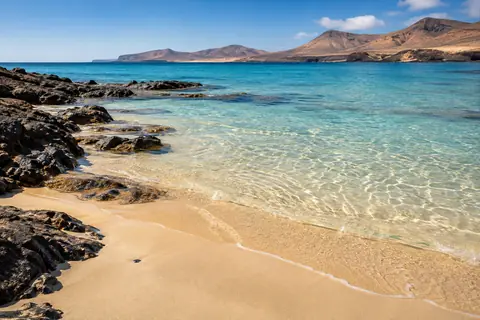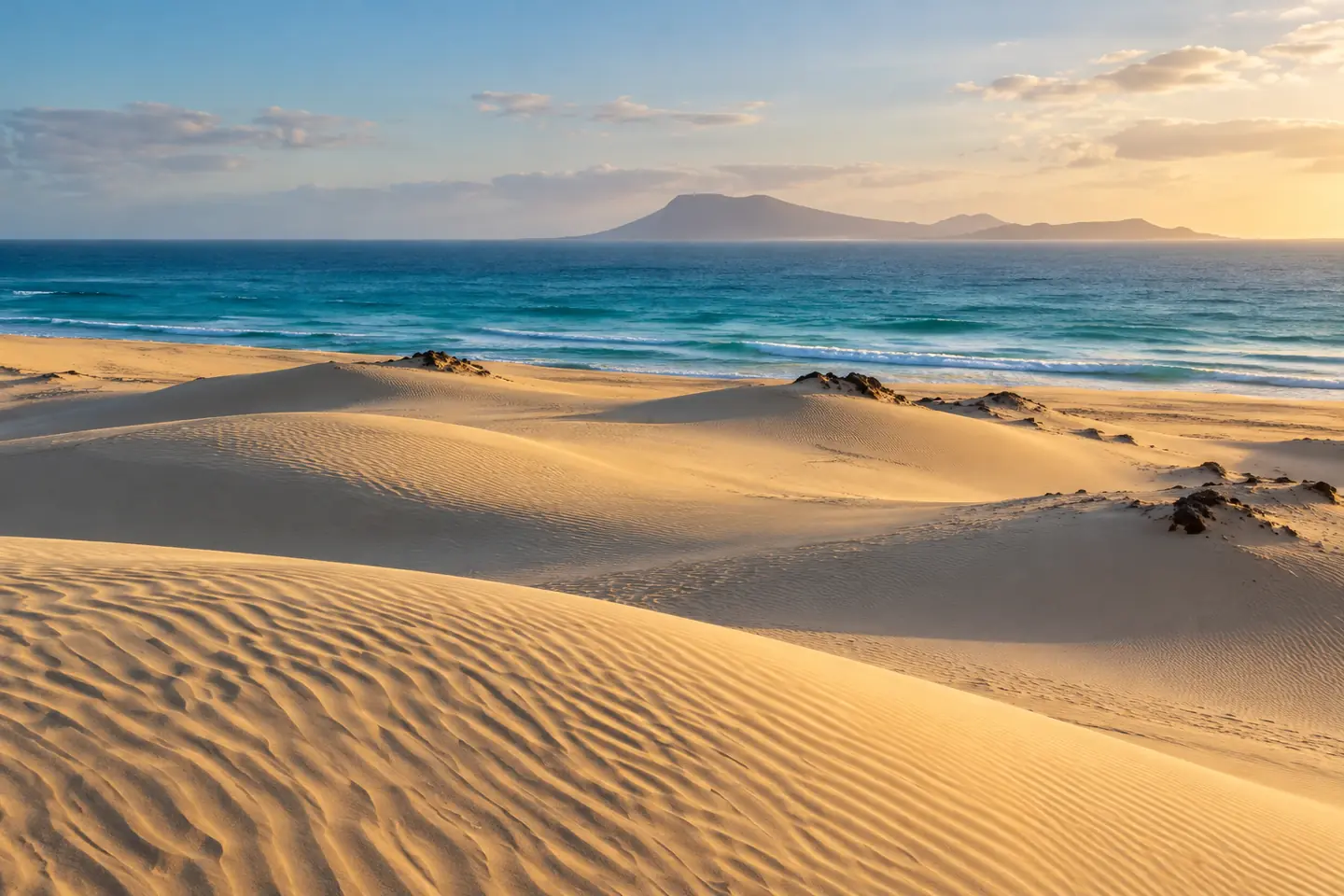
- Setting
- Protected dune coast in north-east Fuerteventura
- Choose between
- A short walk, a beach day or a separate hike
- Bring
- Water, sun protection and a return plan
Choose the visit that fits your day
For a brief introduction, pick a permitted access, walk into the sand and leave time to enjoy the change in landscape. You do not need to cross the whole park to appreciate it. For a beach day, your priority is a suitable shoreline and the facilities your group needs, rather than the most dramatic dune photograph.
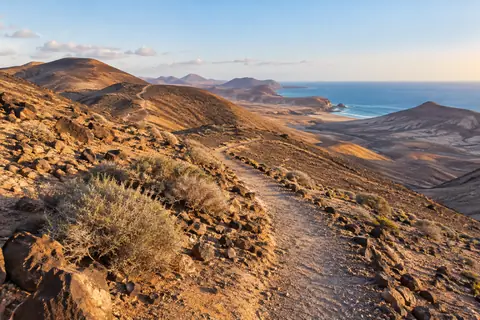
A volcanic walk is a third option. The park also has rugged terrain towards its southern part; Montaña Roja should be planned as a hike, with appropriate shoes and conditions. It is not an effortless extension of a barefoot beach stroll.
| Your priority | Plan around |
|---|---|
| Scenery without a long outing | A short out-and-back from a permitted access |
| Time by the water | A chosen beach and conditions on arrival |
| Walking and views | A mapped route, footwear and weather check |
Grandes Playas is a coast, not one identical beach
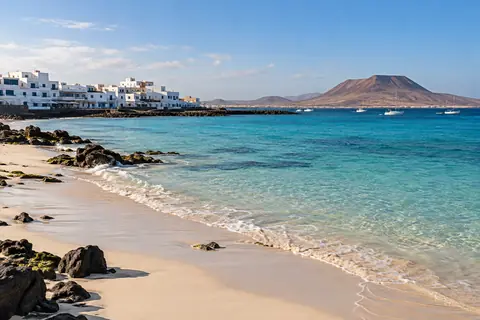
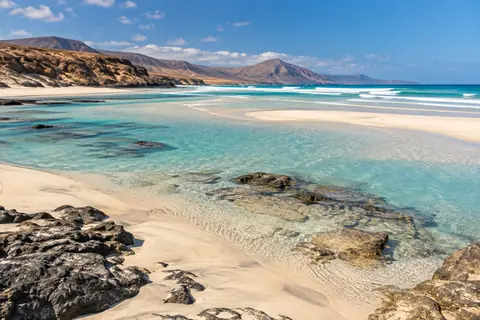
The municipal beach guide names sections including Bajo Negro, Caserón, La Barreta, Punta Prieta, Dormidero or El Burro, and Playa del Moro. These names help you agree where to meet and find your return route. They should not be treated as interchangeable pins on a map.
Select a section according to access, the services you need and the conditions that day. A remote-looking photograph does not tell you whether there is supervision, a convenient toilet or a manageable walk through sand. See the northern beach comparison if the main decision is dunes versus a town cove or El Cotillo.
Plan the access and the way back
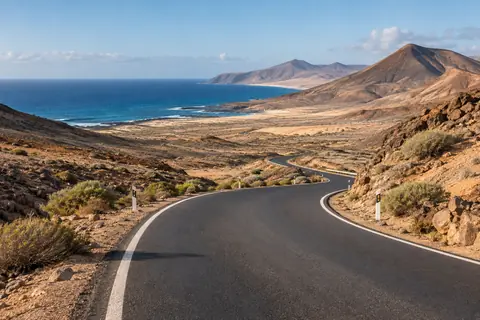
The coast is reached by road, with the natural area explored on foot. Use permitted stopping and parking places; never drive into the dunes. Check the current route to your chosen access rather than relying on a road number copied from an old guide.
If you use public transport, identify the correct stop and return service before leaving. Do not assume the nearest-looking point on a map has a pedestrian crossing or safe waiting area. With a taxi, arrange a clear pickup location that the driver can legally reach. More transport choices are covered in getting around Fuerteventura.
Pack for exposure, even on a short visit
Water, sun protection and a hat are the essentials. Bring enough food for the length of visit you actually plan, especially if you are not staying near services. A light layer can be useful when wind makes a stop feel cooler than the sunshine suggests.
Walking through soft sand takes effort. Shoes are sensible for access routes and essential for rocky terrain; hot sand can also change what feels comfortable. Keep phones and valuables protected from blowing sand, and avoid loading the group with more beach equipment than you can comfortably carry back.
Make the beach easy to leave
For families, a manageable approach and somewhere to take a break often matter more than finding the emptiest spot. Decide who is supervising children in the water, agree a clear meeting place and keep the route back recognisable. Dunes can conceal the road and make distances hard to judge.
Sand is not the same as an accessible path. If someone uses a wheelchair, has limited mobility or needs a pushchair, verify the exact access and facilities in advance. Do not base the whole day on a general claim that the park is accessible. Family holiday planning offers more ways to keep outings comfortable.
Let the sea decide whether it is a swimming day
Clear turquoise water does not reveal the strength of currents or the effect of swell. Look for the beach's current signs, flags and lifeguard instructions. Red means no swimming; yellow calls for caution. Even under a green flag, stay attentive and supervise children.
If conditions are unsuitable, enjoy the landscape from a safe distance or return to town. A change of beach is not automatically a solution, since neighbouring stretches may share the same conditions. Avoid making an ambitious water plan just because you have already carried everything to the shore.
Keep the dunes intact
The park's vegetation, wildlife and sand are part of a protected landscape. Stay in permitted areas, avoid trampling plants, take rubbish out and leave natural materials where they belong. Do not move stones into decorative towers.
For photographs, use the places visitors are allowed to reach. The best souvenir is an image of the landscape as you found it. If you want another day with a different character, choose El Cotillo or an inland walk rather than repeatedly searching for a more isolated dune.
Questions worth asking
Are the dunes in central Corralejo?
The main dune landscape lies outside the built-up town. Check the access you want and how you will get there and back rather than assuming it is beside your accommodation.
How long should I spend at Corralejo dunes?
A short walk and a full beach day need different amounts of time. Choose your main activity first and leave room for the approach, rest breaks and return journey.
Can I drive on the dunes?
No: use lawful road access and permitted parking, then explore the natural area on foot.
Official sources & further reading
Check the linked operator or authority for current access, timetables and conditions before you go.
- Fuerteventura Tourism: Corralejo Natural Park
- La Oliva Tourism: beaches and named coastal sections
- Canary Islands Government: safety at sea