Build a recovery stay guests can trust
A convincing wellness property is not a collection of spa objects. It is a controlled system for clean equipment, comfortable practice, heat and water safety, fresh air, access, and precise guest information.
The short answer: Begin with one recovery use case and document how every shared surface is cleaned, dried, inspected, and explained. Add heat, immersion, or powered equipment only when utilities, ventilation, access, maintenance, and emergency procedures can support it.
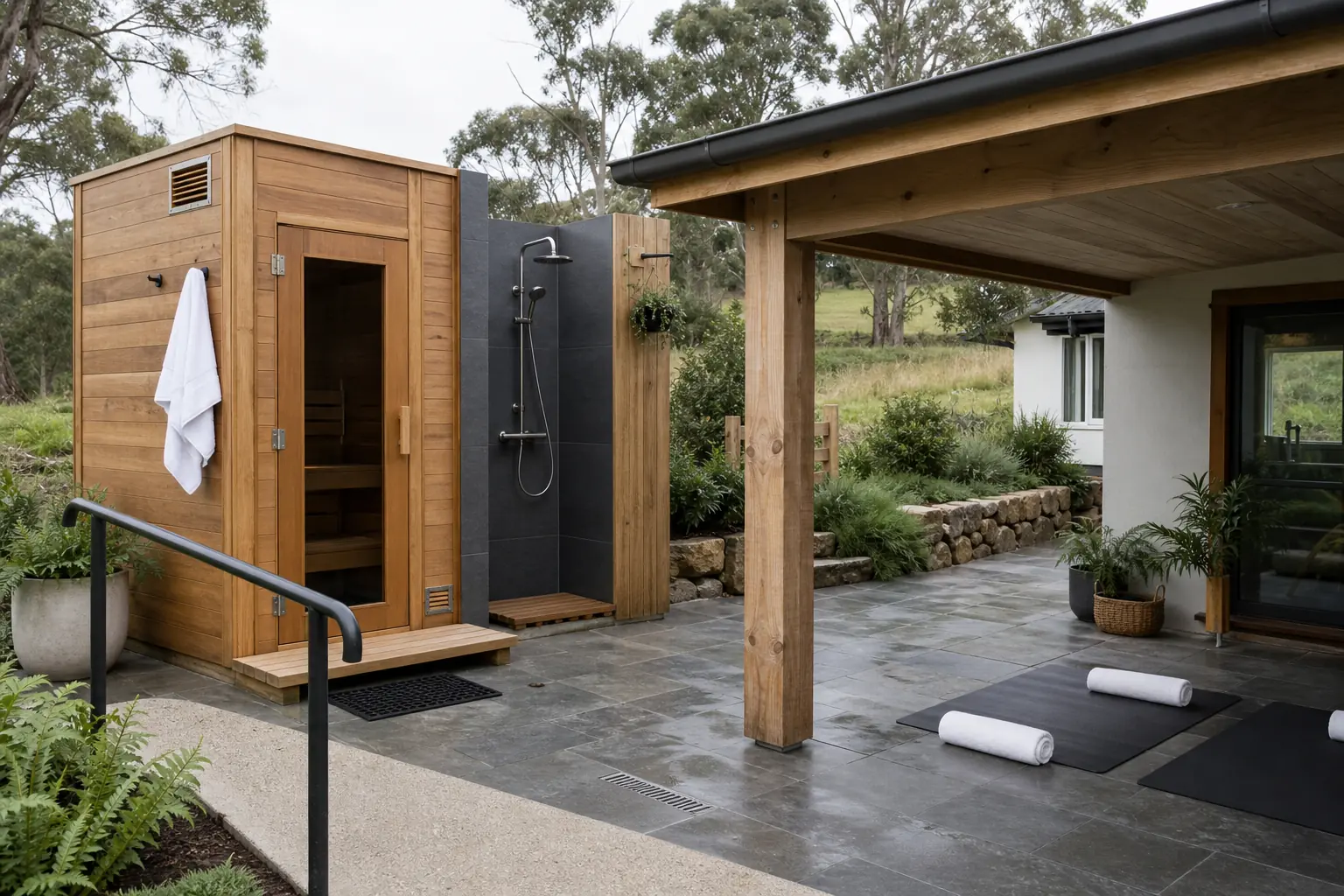
Care for the body without making health promises
Guests should be able to understand the experience, decide whether it suits them, and use it without guessing. That requires clearer boundaries than a typical amenity setup.
-
Treat sanitation as part of the amenity
Separate clean and used items, choose non-porous or launderable contact surfaces, publish a reset method, and keep disinfectant dwell times and equipment instructions in the staff SOP rather than improvising between stays.
-
Engineer water and heat before atmosphere
Confirm drainage, waterproofing, hot-water recovery, electrical load, ventilation, humidity control, slip resistance, and manufacturer clearances before selecting finishes for a sauna, plunge, soaking tub, or steam feature.
-
Buy recovery equipment that can survive turnover
Prefer wipeable, inspectable equipment with replaceable contact parts and available service support. Offer a powered device only when its manufacturer approves unsupervised consumer use, the insurer accepts it, contraindications can be presented before use, and staff can test, clean, isolate, and close it under a written rule.
-
Design access into the whole sequence
Consider the route from parking to changing, showering, practice, and rest. Door width, thresholds, transfer space, handholds, seating, reach ranges, and controls matter together; one accessible fixture does not make an accessible experience.
-
State contraindication boundaries plainly
Provide the maker's warnings, age limits, supervision rules, time and temperature controls, and an easy way to opt out. Tell guests to assess suitability for themselves or with their own qualified professional; do not screen, diagnose, prescribe, or imply treatment.
-
Ventilate for use, drying, and reset
Size extraction and fresh-air provision for the actual wet or heated activity, not only room occupancy. Staff must be able to dry enclosed spaces fully and identify condensation, odor, corrosion, or microbial growth early.
-
Sell a practice, never an outcome
Describe what is present, how it works, and what the guest can choose to do. Avoid claims about detoxification, pain relief, sleep improvement, recovery speed, circulation, anxiety, immunity, or any other medical or therapeutic result.
This path fits when
- The property has a clear audience such as walkers, cyclists, yoga groups, sober travelers, or couples seeking a private bathing ritual.
- A named person can own water testing, equipment inspection, laundry separation, consumable stock, and maintenance records.
- The building can support the required power, plumbing, drainage, ventilation, privacy, and safe circulation.
- Guest communications can explain use and limitations without presenting the host as a wellness practitioner.
- There is enough turnaround time to clean, dry, refill, test, and document the amenity before arrival.
Choose a simpler promise when
- The concept depends on unverified health benefits, detox language, or a host deciding who should use the equipment.
- A hot tub, plunge, or sauna would be serviced only when a problem becomes visible.
- Wet users must cross polished floors, stairs, bedrooms, or shared public areas without a safe route.
- The site has marginal hot water, drainage, electrical capacity, ventilation, water supply, or wastewater handling.
- Accessibility is implied by broad labels instead of measured features and a photographed route.
A dry practice studio with excellent mats, ventilation, storage, and wash facilities can deliver a stronger wellness stay than a poorly maintained installation with water or heat.
Budget for the control system as well as the guest feature
These are editorial planning ranges, not bids. Local labor, permits, utility upgrades, professional fees, tax, freight, and ongoing testing can materially change the total.
Practice-ready room
$750-$3,500Plan for washable mats and props, closed clean storage, used-item handling, task lighting, fresh-air improvement, water service, robe and towel hooks, an equipment log, and measured access information.
Dedicated recovery suite
$8,000-$30,000Allow for durable flooring, a proper shower or rinse route, upgraded extraction, acoustic control, changing space, built-in storage, commercial-duty recovery tools, accessible details, and professional review of electrical and plumbing work.
Heat or immersion installation
$35,000-$150,000+Include design and permitting, structure, waterproofing, drainage, power or fuel, water treatment, ventilation, guarding, controls, commissioning, service access, staff training, downtime allowance, and a replacement reserve.
Follow the guest from arrival to dry recovery
Arrival and disclosure point
Let guests make an informed choice before they undress or begin.
- Place concise operating limits, manufacturer warnings, emergency shutoff information, and assistance contacts where the activity starts.
- Provide a bench and stable surface for changing footwear, setting down water, and reading instructions.
- Keep participation optional and show an obvious bypass route to the rest of the property.
Practice and mobility zone
Give movement enough clear, ventilated, non-slip space.
- Mark usable floor dimensions after doors, furniture, radiators, and stored equipment are accounted for.
- Store clean mats and props off the floor; provide a separate lidded location for used items awaiting reset.
- Offer stable seating and keep the route, controls, and hydration point reachable without stepping over equipment.
Heat, water, and bathing zone
Control temperature, humidity, water quality, and falls.
- Use visible controls, guarded hot surfaces where required, reliable time limits, non-slip transitions, and lighting that remains legible through steam.
- Keep testing points, drains, filters, isolation valves, panels, and shutoffs accessible to staff and technicians.
- Provide a nearby shower or rinse procedure and prevent wet traffic from crossing absorbent or polished finishes.
Equipment and linen station
Prevent clean stock, used stock, and maintenance tools from mixing.
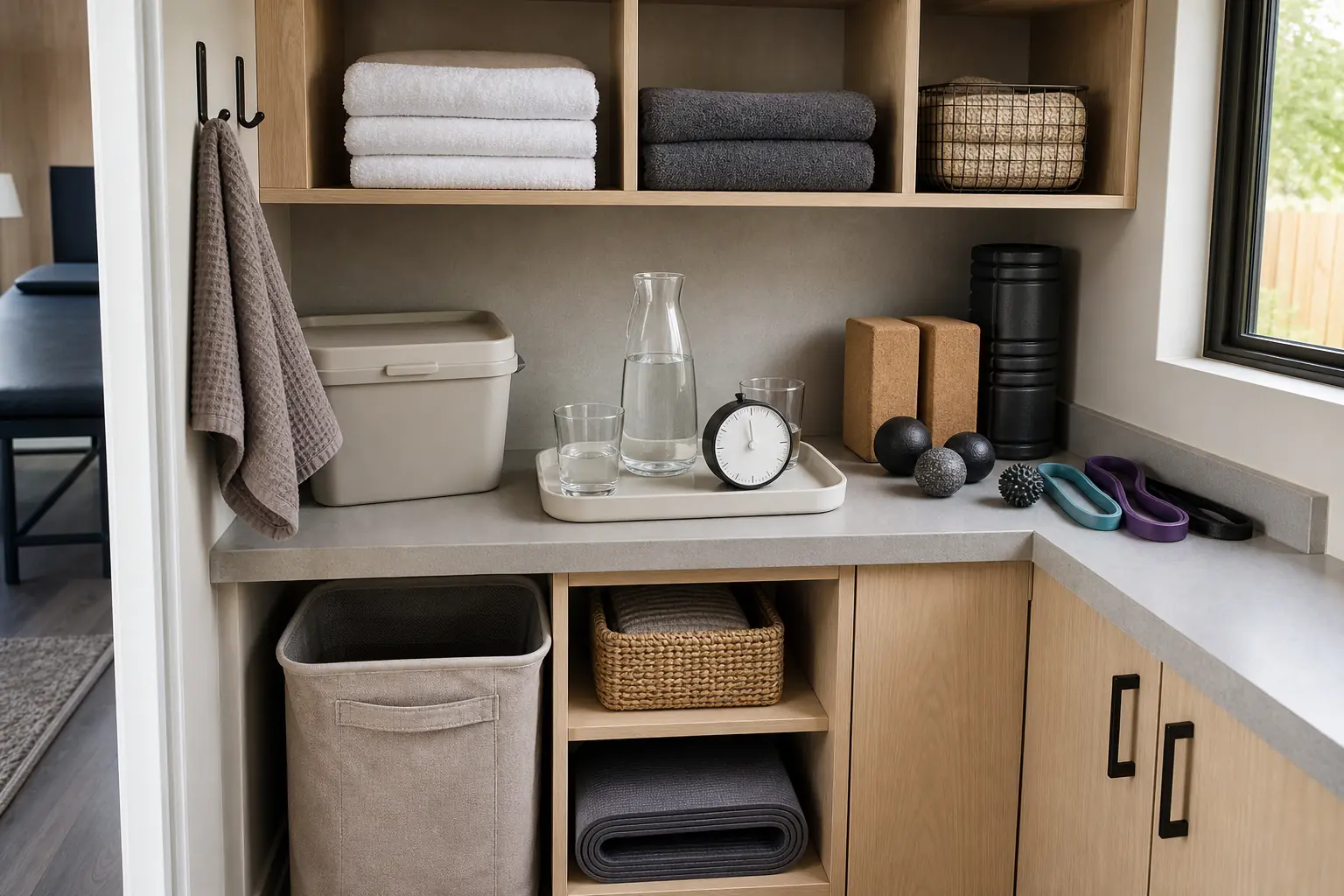
- Assign labeled closed storage for sanitized equipment, clean towels, chemicals, spare parts, and quarantined items.
- Track inspection dates and remove any item with damaged upholstery, frayed cables, leaks, odor, or an unreadable label.
- Size laundry stock for full replacement between groups rather than asking guests to reuse damp textiles.
Cool-down and accessible recovery
Finish with comfort, observation, and an uncomplicated exit.
- Provide supportive seating, drinking water, fresh air, moderate light, and enough turning space for the stated access route.
- Avoid loose rugs, low decorative tables, and clutter where guests may be wet, warm, or adjusting to a temperature change.
- Position an easy-to-use call method and list the property address with emergency information.
Choose one bodily ritual and make its evidence complete
Each version needs a different operating model. Combining all three at launch increases cleaning, utility, instruction, and maintenance complexity.
The movement studio
Promise: Private, uncluttered space for self-directed stretching, yoga, or mobility work.
Proof: Published floor dimensions, clean props, resilient flooring, adjustable fresh air, full-length storage, stable seating, and clear access measurements.
Avoid: Calling an empty bedroom a studio, supplying porous props that cannot be reset, or implying instruction when none is provided.
The self-directed mobility room
Promise: A hygienic, low-complexity place for stretching, gentle mobility, hydration, and rest after travel or activity.
Proof: Clear floor dimensions, wipeable mats and rollers, stable seating, fresh air, water, towel stock, equipment inspection, accessible storage, and optional routines that make no treatment claim.
Avoid: Specialist devices that are not approved for unsupervised consumer use, prescriptive routines, or claims that equipment prevents injury or accelerates healing. Handle boots, mud, and wet clothing through the Outdoor & Adventure gear-flow standard.
The private thermal ritual
Promise: A well-managed sauna, soak, or contrast experience with simple controls and privacy.
Proof: Permitted installation, commissioned utilities, manufacturer instructions, temperature and time controls, water-care records, non-slip circulation, ventilation, and local servicing.
Avoid: Stacking sauna, plunge, steam, and hot tub features without staffing the testing and maintenance each one requires.
Reset, inspect, record, and disclose
Wellness turnover and maintenance
- Close any amenity that misses a test, inspection, temperature, water-quality, ventilation, or cleanliness requirement; do not leave the decision to the arriving guest.
- Clean in the documented order, observe product contact times, launder all guest-contact textiles, and dry equipment completely before returning it to clean storage.
- Record water readings, filter status, temperatures, faults, corrective actions, and the staff member completing each required check.
- Inspect cables, housings, mats, rollers, benches, handholds, drains, seals, control labels, and emergency shutoffs on a defined frequency.
- Run extraction through the full drying period and check enclosed corners for condensation, residue, corrosion, odor, or surface damage.
- Keep manufacturer manuals, contractor details, warranties, consumable specifications, and replacement parts available to operations staff.
Photography that proves care
- 1Show the complete activity area wide enough for guests to judge space, doors, floor transitions, privacy, and proximity to washing facilities.
- 2Photograph storage open once so clean equipment, towel quantity, and organization are visible; keep chemical and staff storage out of guest access.
- 3Include controls, steps, handholds, thresholds, seating, and measured access features without using a broad accessibility label the images cannot prove.
- 4Show heat or water installations operating at their normal safe fill and setup, with guards and covers exactly as guests will receive them.
- 5Use captions for factual details such as dimensions, maximum occupancy, private or shared status, and seasonal availability.
[Specific self-directed activity] + [physical proof] + [sanitation or maintenance fact] + [important limit or disclosure].
Use the private 3.2 m by 3.8 m movement room with four washable mats, blocks, fresh-air ventilation, and closed clean storage. Props are reset between bookings; no classes, treatment, or therapeutic services are included.
Where wellness concepts lose trust
Making medical claims
Describe the amenity and its use. Remove promises about healing, detox, pain, sleep, mental health, performance, or recovery outcomes.
Using a household cleaning routine for specialist equipment
Follow product and manufacturer requirements, document contact time, separate used stock, and verify that every surface can be fully dried.
Treating ventilation as a comfort extra
Heat, water, damp textiles, and occupied practice rooms create loads that must be assessed, extracted, and monitored.
Hiding contraindications in a waiver
Put material warnings and limits before use, in readable language, while keeping the manufacturer guidance available.
Buying devices without a service path
Confirm parts, qualified repair, inspection intervals, consumables, and a closure procedure before placing equipment in guest use.
Calling one fixture accessible
Describe measured routes and individual features. Accessibility depends on connected movement, transfer, reach, controls, and facilities.
Open only after the operating proof is ready
The implementation sequence moves from boundary setting to technical review, then controlled commissioning and an evidence-led launch.
- 1. Define the ritual and boundary
Name the self-directed activity, intended guest, optional nature, exclusions, manufacturer warnings, and words the listing will not use.
- 2. Audit the building and route
Review power, water, drainage, waterproofing, ventilation, structure, privacy, slips, access, emergency response, permits, and insurance with the relevant professionals.
- 3. Commission the operating system
Install and test equipment, write cleaning and closure criteria, train staff, establish records, secure service support, and run full wet or heated turnover rehearsals.
- 4. Publish measured evidence
Photograph the actual setup, add dimensions and factual limits, confirm no medical claims remain, and monitor faults, guest questions, and maintenance time after launch.
Wellness & Recovery FAQ
Can I call my vacation rental a wellness retreat?
Use the label only when the property provides a coherent wellness experience and the copy remains factual. State whether activities are self-directed, whether any practitioner is independent, what is included, and what is not. Do not suggest diagnosis, treatment, supervision, or a guaranteed result.
What should be cleaned between every booking?
Every guest-contact surface and shared item should follow its documented reset requirement. That commonly includes mats, props, rollers, controls, handles, seating, shower areas, water vessels, towels, robes, and storage touchpoints. Follow manufacturer instructions and applicable local requirements for specialist installations.
How should I disclose sauna, hot tub, or cold-plunge risks?
Present the manufacturer warnings, age and supervision rules, time and temperature limits, safe entry instructions, emergency shutoff, and closure conditions before use. Guests decide personal suitability and may seek their own qualified advice; that does not change the host's compliance, maintenance, disclosure, inspection, or closure duties.
What accessibility information should the listing include?
Publish measurements and photographs for the full route: parking, entrances, thresholds, doors, turning areas, transfers, seating, controls, shower or changing space, and any steps. Describe individual features precisely instead of making an unsupported whole-property claim.
Is a sauna or plunge necessary for a wellness listing?
No. A clean movement room, reliable bathing facilities, good ventilation, thoughtful access, hydration, and well-managed recovery equipment can form a complete offer. Add heat or immersion only when the property and operations can sustain the extra technical duties.
Wellness & Recovery is a trust proposition: sanitary equipment, controlled heat and water, fresh air, accessible routes, honest boundaries, and maintenance records must support every visible amenity.
Browse all Themes