Romance & Celebration
Design the stay around what guests will do together: arrive without interruption, get ready without competing for space, take photographs in good light, share a meal, and close the evening without disturbing the street.
The short answer: A convincing celebration stay is not made from petals and slogans. It gives guests control over privacy, a gracious first ten minutes, enough mirrors and surfaces, a weather-aware plan for dining or vows, and clear limits on visitors, sound, parking, and cleanup.
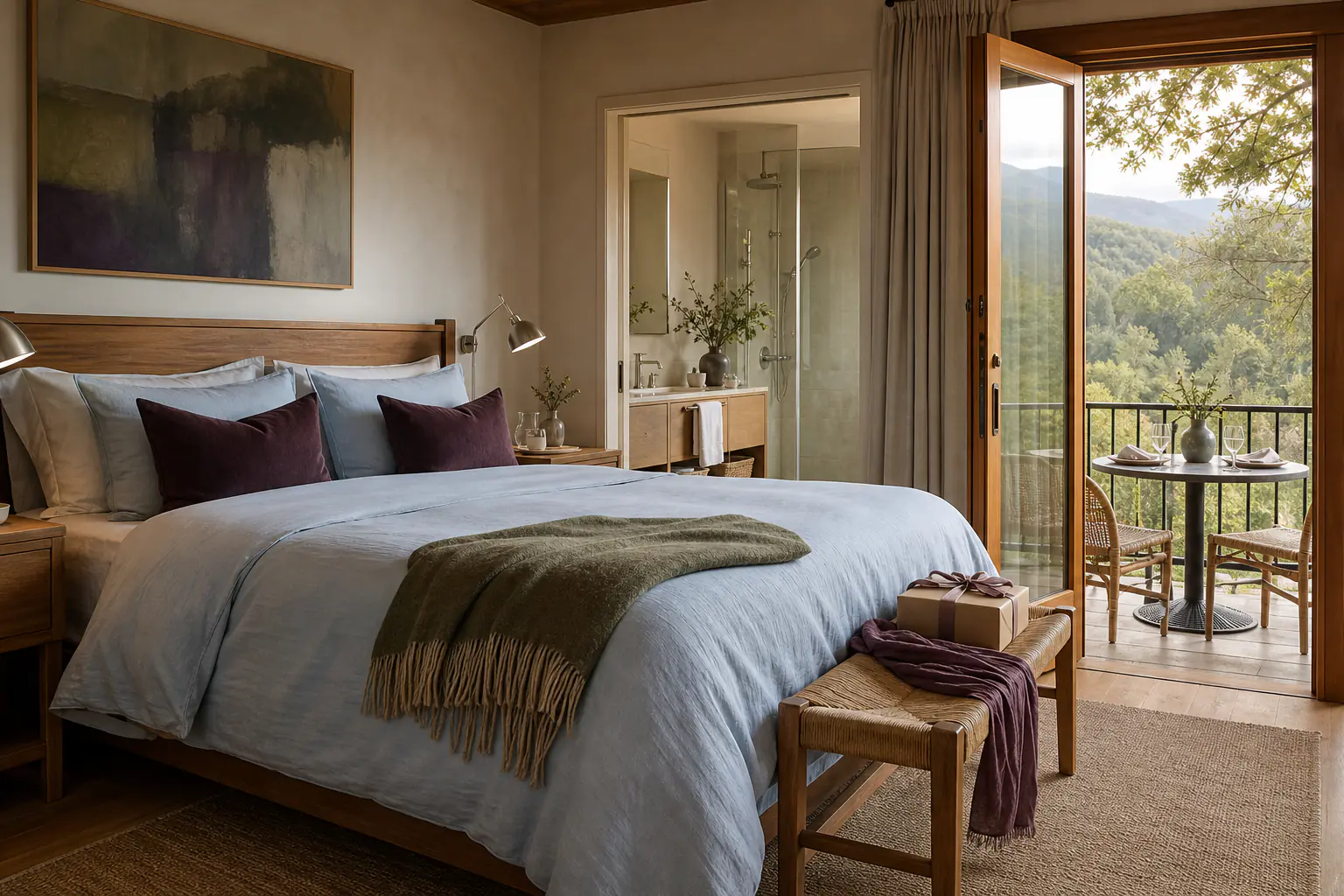
Make the occasion easy to inhabit
Romance is personal, and celebration adds logistics. Build a neutral, flexible setting that works for different couples, identities, traditions, and reasons for gathering, then let guests supply the meaning.
-
Protect privacy by design
Check sightlines from paths, neighboring windows, cameras, shared yards, and service access. State exactly what is private, what is shared, and when a host or contractor may enter the property.
-
Stage a self-running arrival
Use discreet wayfinding, reliable entry, flattering first light, luggage space, chilled water, and one optional welcome gesture. The moment should work for every guest without requiring a host performance or assumptions about alcohol, gender, or relationship roles.
-
Plan dressing before decoration
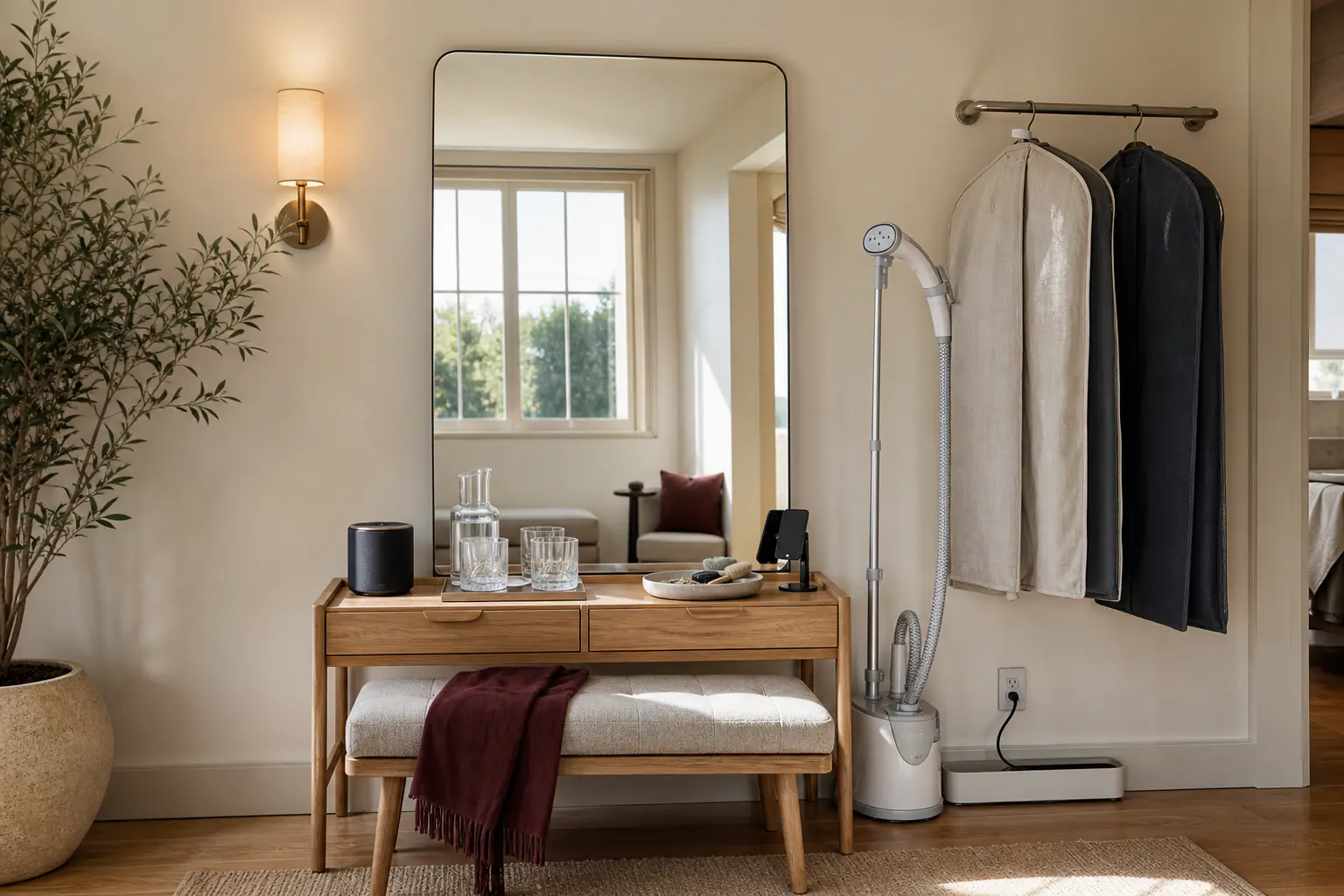
Provide full-length and face-height mirrors, seated dressing light, outlets, hooks, a steamer, garment storage, and clear counters. Keep bathroom use and getting-ready circulation from blocking each other.
-
Give dining and ceremony separate jobs
Map chairs, table service, food holding, waste, power, restrooms, and a rain alternative before advertising a meal or vow setup. A beautiful location is not usable until people and supplies can reach it safely.
-
Set generous, enforceable boundaries
Publish overnight occupancy, daytime visitor count, parking, quiet hours, prohibited equipment, and event approval rules in plain language. Base every limit on permits, insurance, septic capacity, fire egress, and neighbor impact.
-
Leave no celebration residue
Choose reusable or easily removed styling, prohibit confetti and open-flame surprises, define waste sorting, and price any approved reset work in advance. The next guest and the surrounding property should not inherit the occasion.
A strong fit when
- The sleeping and bathing areas can be screened from neighbors, shared paths, and service traffic.
- There is a natural arrival sequence and at least one complete place to dress, photograph, dine, or exchange vows.
- The host can state a legal, insured visitor policy and monitor compliance without intruding on private interior space.
- Parking, toilets, power, food service, weather cover, and waste can support the advertised number of people.
- The visual language can welcome many kinds of couples and celebrations without relying on gendered props or romantic stereotypes.
A weak fit when
- The main outdoor area directly overlooks a close neighbor or depends on music carrying after quiet hours.
- The property is marketed for gatherings beyond its permitted occupancy, parking, egress, septic, or insurance limits.
- Guests must move furniture, share one small mirror, or route food through a bedroom to make the advertised setup work.
- The ceremony or dining plan has no credible indoor alternative for heat, wind, rain, smoke, or cold.
- Turnovers are too short to inspect stains, glass, wax, food waste, outdoor areas, and moved furnishings properly.
A two-person anniversary stay and a daytime ceremony are different operating models. Choose one as the primary offer, then describe any approved add-on with its own capacity, fee, timing, and reset terms.
Spend on flow before flourishes
These are broad USD editorial planning ranges, not supplier quotes or return forecasts. Confirm labor, tax, professional fees, approvals, insurance, utilities, access work, and downtime for the property before buying occasion-specific decor.
Private couple edit
$300-$1,500Improve entry lighting, window screening, bedding, mirror placement, hooks, garment storage, glassware, table linens, and one flexible arrival setup. Remove worn, gendered, or novelty romance props.
Complete celebration flow
$3,000-$12,000Add a dressing station, better bathroom lighting, a durable dining setup, outdoor power and shielded light, weather-ready seating, service storage, and photo-friendly wall or garden maintenance.
Ceremony-ready property
$20,000-$75,000+Consider a dressing room, covered dining area, accessible route, restroom work, electrical capacity, landscape screening, drainage, fire-safe egress, and a defined service and waste zone after professional and local approvals.
Follow the occasion from threshold to reset
Arrival and private threshold
Let guests enter smoothly and understand the privacy boundary at once.
- Light the route from parking to the door and keep codes, keys, and signage simple enough for a late arrival.
- Screen direct views into the bedroom, bath, tub, terrace, and dining area while preserving safe paths and ventilation.
- Provide a luggage landing, two coat hooks, water, and an optional note with no assumed names, titles, alcohol, or occasion.
Bedroom and bath
Support privacy, sleep, and shared use without decorative clutter.
- Give both sides of the bed a surface, outlet, reading light, and clear route to the bathroom.
- Use functional window coverings and disclose any bathroom window, outdoor shower, camera, or shared-space sightline.
- Stock matching quantities for booked guests, including towels, robes when offered, glasses, and unscented options where practical.
Dressing and photograph flow
Create a usable preparation zone and honest places to document the day.
- Pair a full-length mirror with a face-height mirror, even light, a chair, outlets, hooks, a steamer, and garment clearance.
- Keep one wall, window edge, or outdoor backdrop free of bins, cables, exit signs, and fragile styling.
- Map a route between dressing, portrait, ceremony, and dining zones that avoids service traffic and trip hazards.
Dining and ceremony zone
Make the advertised gathering physically and legally workable.
- Set and photograph the actual maximum table or chair layout with compliant aisles and exits left open.
- Locate food staging, refrigeration, water, power, toilets, waste, and vendor access before fixing the guest layout.
- Write a rain, wind, heat, smoke, and cold alternative that stays within the approved indoor capacity.
Outdoor edge and service exit
Contain sound, light, parking, and cleanup at the property boundary.
- Aim speakers away from neighbors, use shielded lighting, and close outdoor use at the published local time.
- Mark parking and rideshare pickup so driveways, fire access, verges, and neighboring spaces remain clear.
- Give staff a separate place for bins, used linens, crates, extinguished candles, and furniture reset photographs.
Choose the scale of the occasion
A focused version is easier to photograph, describe, operate, and book responsibly. Do not imply event use when the property is only equipped for overnight guests.
The private milestone stay
Promise: Position the property for two people marking an anniversary, honeymoon, proposal, babymoon, or personal milestone in their own way.
Proof: Secluded arrival, screened bedroom and bath, balanced bedside setup, flexible welcome option, breakfast or dinner setting for two, and exact privacy disclosures.
Avoid: Presuming a proposal, supplying unrequested alcohol, using bride-and-groom language, or filling the room with red hearts and scripted messages.
The preparation house
Promise: Position the stay as a calm place for an approved number of guests to dress, gather, and take photographs before leaving for another venue.
Proof: Multiple mirrors and outlets, garment rails, steamers, labeled rooms, natural-light portrait areas, transport timing, visitor policy, and a food-and-drink cleanup station.
Avoid: Implying an unapproved party, hiding the visitor limit, letting makeup or garment work take over beds, or showing more people than the stated capacity.
The small ceremony stay
Promise: Position the property for a specifically permitted vow exchange and meal with a fixed guest count and schedule.
Proof: Measured layouts, weather alternative, accessible route details, vendor and parking plan, restroom count, sound cutoff, fire-safe lighting, waste plan, and written approval terms.
Avoid: Using overnight occupancy as event capacity, depending on good weather, moving gatherings indoors above capacity, or treating neighbors as part of the event infrastructure.
Boundaries belong in the product
Arrival, event, and cleanup controls
- Record permitted overnight guests, approved daytime visitors, vehicles, vendors, arrival windows, outdoor cutoff, and departure time in one booking-specific summary.
- Share vendor access, power, flame, furniture, food, alcohol, music, and decoration rules before accepting any event-related fee or delivery.
- Notify neighbors through the locally appropriate standing process, provide one response contact, and enforce the same exterior quiet boundary for every booking.
- Photograph the standard furniture plan before arrival; charge and schedule approved layout changes instead of leaving guests to lift or drag furnishings.
- After departure, inspect access routes, drains, landscaping, furniture feet, glass, wax, tape, confetti, food, bins, linens, upholstery, and neighboring edges before releasing the reset.
- Restock by count, remove personalized materials, ventilate food and fragrance, return every room to the photographed layout, and log damage or excess cleaning factually.
Photo proof to publish
- 1Show the path from parking or gate to the entry, including any shared approach that affects privacy.
- 2Photograph the bed, bath screening, mirror and outlet placement, garment storage, and dressing chair at useful scale.
- 3Show the real maximum dining or ceremony layout in a wide frame with exits and circulation visible.
- 4Include the indoor weather alternative and caption its stated capacity separately from the outdoor setup.
- 5Photograph the nearest-property context honestly and show exterior lighting at the hour guests may use the space.
- 6Use people only with documented permission, represent varied couples and celebrations respectfully, and never imply included vendors or styling that are not part of the stay.
[specific occasion version] + [two or three physical proofs] + [privacy fact] + [exact visitor or capacity boundary] + [weather or quiet-hours fact]
Private milestone cottage with a screened terrace, dressing station, and dinner table for two. The house and terrace are exclusive to registered guests; no daytime visitors or events. Outdoor use ends at 9 p.m., and the same table is available indoors in wet weather.
Where celebration listings lose trust
Selling a mood instead of privacy
Replace "romantic escape" with facts about exclusive spaces, screening, shared routes, host access, and neighboring sightlines.
Treating occupancy as event capacity
Set separate limits for sleepers and visitors, then verify parking, toilets, egress, septic, permits, insurance, and local rules.
Decorating for one kind of couple
Use adaptable settings and inclusive language. Keep names, pronouns, alcohol, color, tradition, and occasion-specific styling optional.
Photographing an impossible layout
Stage the actual included furniture at the approved count and leave required paths, exits, and service access visible.
Forgetting the end of the night
Plan sound cutoff, rideshare pickup, waste, food storage, stain response, outdoor sweep, furniture reset, and next-day contractor access before opening dates.
Build from limits to listing
Complete the sequence in order. The responsible capacity and operating model determine the design, photographs, and words that follow.
- Step 1: Establish boundaries
Confirm permissions, insurance, fire and overnight capacity, daytime visitors, parking, toilets, septic load, accessibility, cameras, neighbors, sound, and outdoor hours. Select one primary version.
- Step 2: Walk the occasion
Trace arrival, luggage, dressing, bathroom use, portraits, ceremony or dinner, weather change, departure, vendor movement, and waste. Note every collision, exposed sightline, and missing utility.
- Step 3: Complete and test
Install privacy, lighting, mirrors, hooks, outlets, furnishings, service supplies, and weather backup. Run the setup at advertised capacity and complete a timed cleanup.
- Step 4: Publish the proof
Photograph the real layouts and context, write exact inclusions and limits, add booking-specific approval questions, and place inspection and reset checks in the operating procedure.
Romance and celebration FAQ
What makes a vacation rental suitable for a romantic stay?
Useful privacy, comfortable shared routines, good sleep, flattering but functional light, an easy arrival, and one complete activity for two matter more than themed decor. Disclose shared paths, nearby homes, cameras, host access, and any space that is not exclusive.
Can overnight occupancy be used as ceremony capacity?
No. Sleeping capacity does not establish safe or permitted event capacity. Confirm local approvals, insurance, fire egress, toilets, septic load, parking, accessibility, food service, and neighbor restrictions, then publish a separate daytime visitor limit.
How should hosts support getting-ready photographs?
Provide even window or fixture light, full-length and face-height mirrors, garment clearance, hooks, outlets, a chair, a steamer, clear counters, and an uncluttered backdrop. Show those features at honest scale and obtain permission for every identifiable person in listing images.
Should a host provide flowers, alcohol, candles, or personalized decor?
Only as an optional, clearly described arrangement that accounts for allergies, licensing, fire rules, cleanup, and guest preference. A flexible welcome is more inclusive than assuming every celebration uses alcohol, fragrance, open flame, names, or a particular visual tradition.
How can a celebration property protect neighbor relationships?
Set conservative visitor, vehicle, sound, and outdoor-time limits; aim light and speakers inward; keep fire access clear; provide a response contact; and act promptly on breaches. Do not advertise a gathering format the site or neighborhood cannot absorb.
The best celebration stay makes room for the guests, not a stereotype: private where it matters, graceful on arrival, practical for dressing and photographs, honest about capacity, considerate at the boundary, and completely reset afterward.
Browse all Themes