Quiet & Reset.
Build a stay that lowers the volume within five minutes. Start with sleep, sound, and light; add one complete analog ritual; then make the promise visible in the listing.
The short answer: A convincing quiet stay does not need a spa, a remote cabin, or a room full of “wellness” objects. It needs fewer interruptions, honest acoustics, controllable darkness, comfortable reading light, and an operating routine that preserves those conditions for every guest.
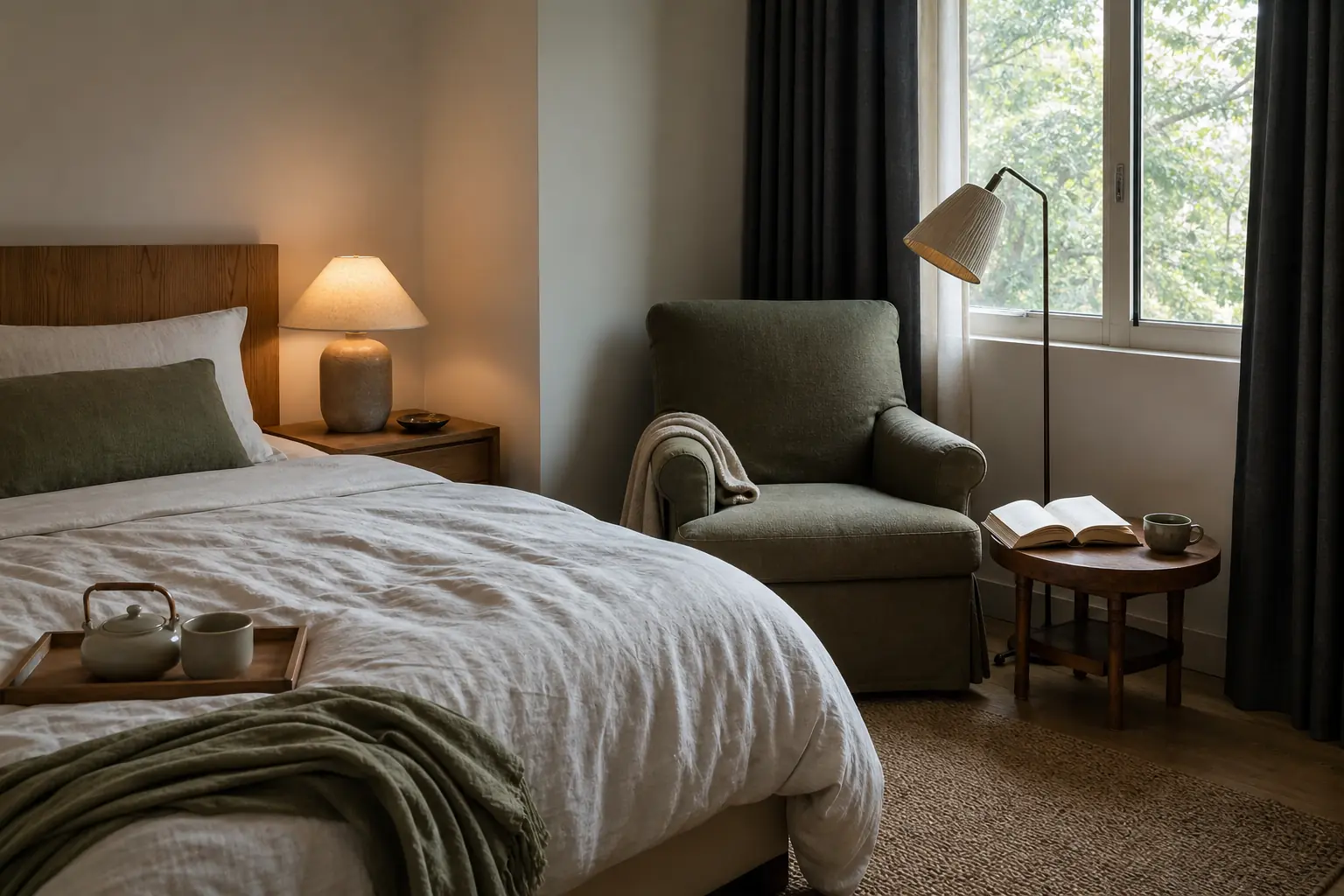
Five conditions do the real work.
Use these as a pass-or-fail brief. If one is missing, fix it before adding another feature.
-
Control sound honestly
Reduce sound you can control with door seals, soft surfaces, quiet appliances, and clear quiet hours. Disclose traffic, neighbors, wildlife, or shared walls that you cannot control.
-
Make sleep adjustable
Use true blackout at the window, a supportive mattress, breathable bedding, and simple temperature controls. Give guests choices rather than one prescribed version of comfort.
-
Layer the light
Replace glare with bedside, reading, and low arrival lighting. Keep controls obvious and bulbs consistent; guests should not have to test six switches at night.
-
Create one analog ritual
A reading chair, tea setup, journal, puzzle, or sheltered outdoor seat is enough. One complete ritual is more convincing than a shelf of decorative wellness objects.
-
Remove visual noise
Clear counters, reduce signs, hide spare supplies, and leave useful empty space. Calm comes from editing and function, not from filling every surface with neutral decor.
A strong fit when
- The sleeping room is separated from gathering areas and the loudest exterior edge.
- You can control mechanical noise, lighting, arrival, and quiet-hour expectations.
- You are willing to describe natural, street, neighbor, and shared-building sound accurately.
Do not lead with “quiet” when
- Nightlife, event traffic, construction, or shared-wall noise is frequent and outside your control.
- The property depends on loud HVAC, pumps, generators, or outdoor entertainment late at night.
- The listing needs vague words such as “secluded” to hide what an overnight test would reveal.
A noisy property can still offer better sleep and a good reading corner. It should not make quiet its headline promise until the conditions support it.
Spend in the order guests feel it.
These Temple Holidays editorial planning estimates are in USD for furnishings and materials, not supplier quotes. Local labor, tax, permits, and structural work are not included.
Edit and prove
$250-$1,000Remove clutter, standardize warm bulbs, add a real reading lamp, improve the tea tray, fit simple door seals, and restage the listing around one quiet scene.
Complete the reset
$2,500-$8,000Add made-to-measure blackout, a proper reading chair, better bedding, quieter small appliances, acoustic softness, and a phone-away option that never feels compulsory.
Build a signature space
$12,000-$40,000+Convert a spare room, improve window or wall performance, build a sheltered outdoor nook, or rework lighting and millwork around a dedicated reading or meditation room.
Design the sequence, not a mood board.
Arrival
Lower the tempo immediately.
- Use one warm lamp on arrival instead of every ceiling light.
- Give luggage, coats, and shoes an obvious place so the room stays clear.
- Put the short welcome note, water, and house controls together.
Bedroom
Protect sleep before adding decor.
- Block light at the edges of the window, not only through the fabric.
- Place a lamp, outlet, water surface, and simple control within reach on both sides when two guests can book.
- Remove ticking clocks, bright standby lights, scented products, and noisy mini-fridges.
Reading corner
Make the promised activity physically comfortable.
- Pair one supportive chair with directional light, a side table, and a washable throw.
- Offer a short, deliberate shelf: local writing, fiction, essays, and one visual book.
- Leave enough empty surface for the guest's own book and drink.
Bath and kitchen
Keep the ritual simple and low-risk.
- Use unscented cleaning and laundry products where practical; list any fragrance you do use.
- Offer caffeine-free tea as well as coffee, with clear brewing instructions and clean, lidded storage.
- Choose a quiet kettle and extractor, then test them from the bedroom with the door closed.
Outdoor edge
Use the view without pretending weather does not exist.
- Create one stable seat with shade or rain cover and a place for a cup.
- Screen bins, parking, and service areas from the primary view when possible.
- Use low, shielded lighting and state outdoor quiet hours clearly.
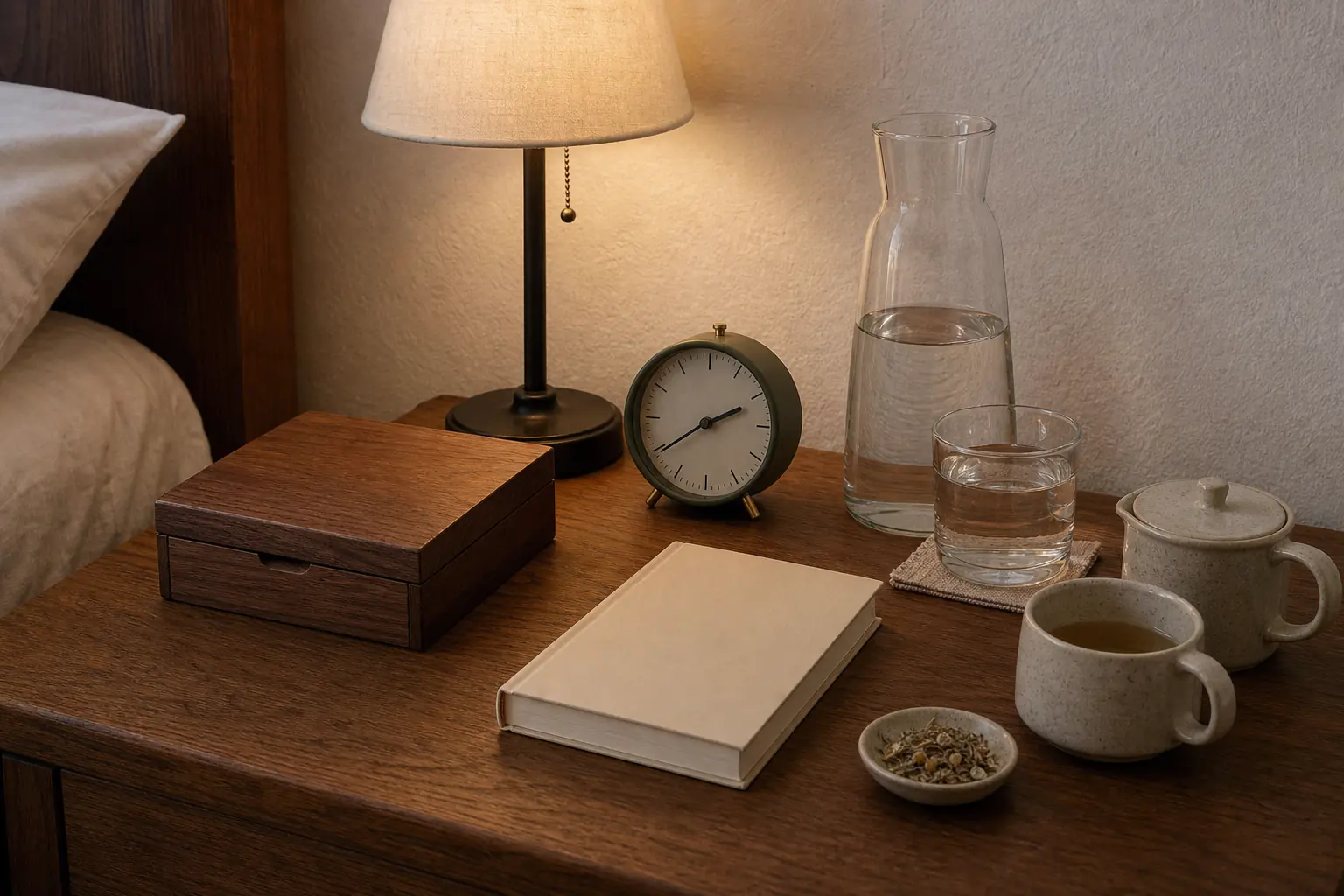
Three ways to make the promise specific.
These are complete directions, not separate pages. Choose one as the lead; borrow from the others only when the guest can still describe the stay in a sentence.
The reading stay
Promise: A place where guests can finish a book and sleep well.
Proof: Excellent chair, directional lamp, edited library, blanket, tea, and a listing photo that shows the full reading setup.
Avoid: Books chosen only by spine color, an unsupportive accent chair, or a “library” that is really shelf decoration.
The digital pause
Promise: Fewer prompts and easier distance from the phone, without policing the guest.
Proof: Optional phone box, analog alarm clock, printed essentials, easy Wi-Fi access when wanted, and no television dominating the bedroom.
Avoid: Blocking connectivity, moralizing house rules, or calling a poorly connected property a digital detox.
The slow morning
Promise: A first hour built around light, a warm drink, and nowhere urgent to be.
Proof: Comfortable breakfast seat, blackout guests can open easily, good tea and coffee, water, local walking note, and uncluttered morning light.
Avoid: A crowded welcome basket, complicated equipment, or food that creates allergy and turnover problems.
The promise has to survive checkout day.
Turnover standard
- Run a five-minute sound check after every turnover: HVAC, fridge, extractor, loose doors, plumbing, alarms, and outdoor equipment.
- Reset lamps to the intended arrival scene and replace bulbs by color temperature, not whatever is available.
- Wash throws and cushion covers on a defined rotation; soft surfaces only help when they stay clean.
- Keep tea, books, journals, and analog items complete. Remove damaged or half-finished supplies immediately.
- Do not use lit candles, incense, smoke rituals, or unlisted fragrance as part of an unattended arrival.
Five photos that prove it
- 1Open with the entire quiet scene: bed, controlled light, reading chair, and window relationship in one honest frame.
- 2Show blackout closed and open if darkness is a core selling point.
- 3Photograph the reading chair from seated height so comfort and lamp placement are legible.
- 4Show the tea or slow-morning setup as guests will actually find it, not overloaded for the photo.
- 5Include exterior context and disclose nearby roads or shared spaces in captions and listing copy.
[A precise quiet condition] + [one activity] + [one honest boundary].
“A light-controlled bedroom, a proper chair for long reading, and a sheltered morning seat. The house is set back from the road; frogs and rain are part of the soundtrack.”
Five common mistakes.
Calling it silent
Use “quiet,” “set back,” or a precise description unless you can control the full sound environment.
Buying decor before fixing sleep
Blackout, bedding, temperature, and mechanical noise carry more value than another decorative object.
Over-scenting the room
Fragrance is subjective and can create discomfort. Default to clean air and make any scent optional.
Confusing empty with calm
Guests still need surfaces, hooks, lighting, controls, and somewhere comfortable to sit.
Making disconnection mandatory
A reset is a choice. Keep Wi-Fi instructions available and the phone-away ritual optional.
Go from audit to new listing in four weeks.
Keep the scope narrow enough to finish. The goal is a better guest experience, not a permanent design project.
- Week 1
Stay one night as a guest. Log every light leak, sound, unclear control, missing surface, and interruption.
- Week 2
Fix the bedroom and arrival sequence. Remove clutter before purchasing anything decorative.
- Week 3
Build one complete version: reading stay, digital pause, or slow morning. Test every object in use.
- Week 4
Rewrite the first 200 words of the listing, reshoot the five proof images, and add the reset checks to the cleaner SOP.
Quiet vacation rental questions, answered.
What makes a vacation rental feel quiet?
A quiet vacation rental controls avoidable sound, light, clutter, and interruptions. The strongest setup combines honest location disclosure, softer acoustics, reliable blackout, layered warm lighting, comfortable seating, and simple house controls.
Do I need to remove the television for a Quiet & Reset stay?
No. Keep it if guests expect it, but avoid making it the visual center of the bedroom or living room. A cabinet, secondary room, or less dominant wall lets guests choose entertainment without weakening the quiet promise.
How much does a quiet vacation rental setup cost?
A credible edit can start around $250-$1,000 in furnishings and materials. A complete room often plans at $2,500-$8,000. Structural acoustic work, custom millwork, or a dedicated room can reach $12,000-$40,000 or more, excluding local labor and taxes.
How can a host reduce noise without renovating?
Start with door seals, felt pads, rug underlays, lined curtains, quieter appliances, HVAC maintenance, and moving vibrating equipment away from sleeping walls. Then write accurate quiet hours and disclose external noise you cannot remove.
What should the listing photos show?
Show the full sleep and reading setup, not isolated decor. Guests should be able to see window coverage, lamp placement, chair support, outdoor context, and the tea or phone-away ritual exactly as it will appear on arrival.
Quiet & Reset is one of ten broad directions. It can stand alone or support a second Theme, but this page contains the complete Quiet & Reset framework.
Browse all Themes