Build a stay guests can cook, brew, and gather around
Choose one culinary promise, equip its complete workflow, connect it to local producers, and show every useful detail before guests book.
The short answer: A strong food and drink vacation rental is not a basket of snacks or a kitchen labeled gourmet. It gives a specific guest the tools, ingredients, storage, instructions, and table space to complete a specific experience: brew excellent coffee, prepare a market dinner, taste regional wine, or preserve a seasonal haul.
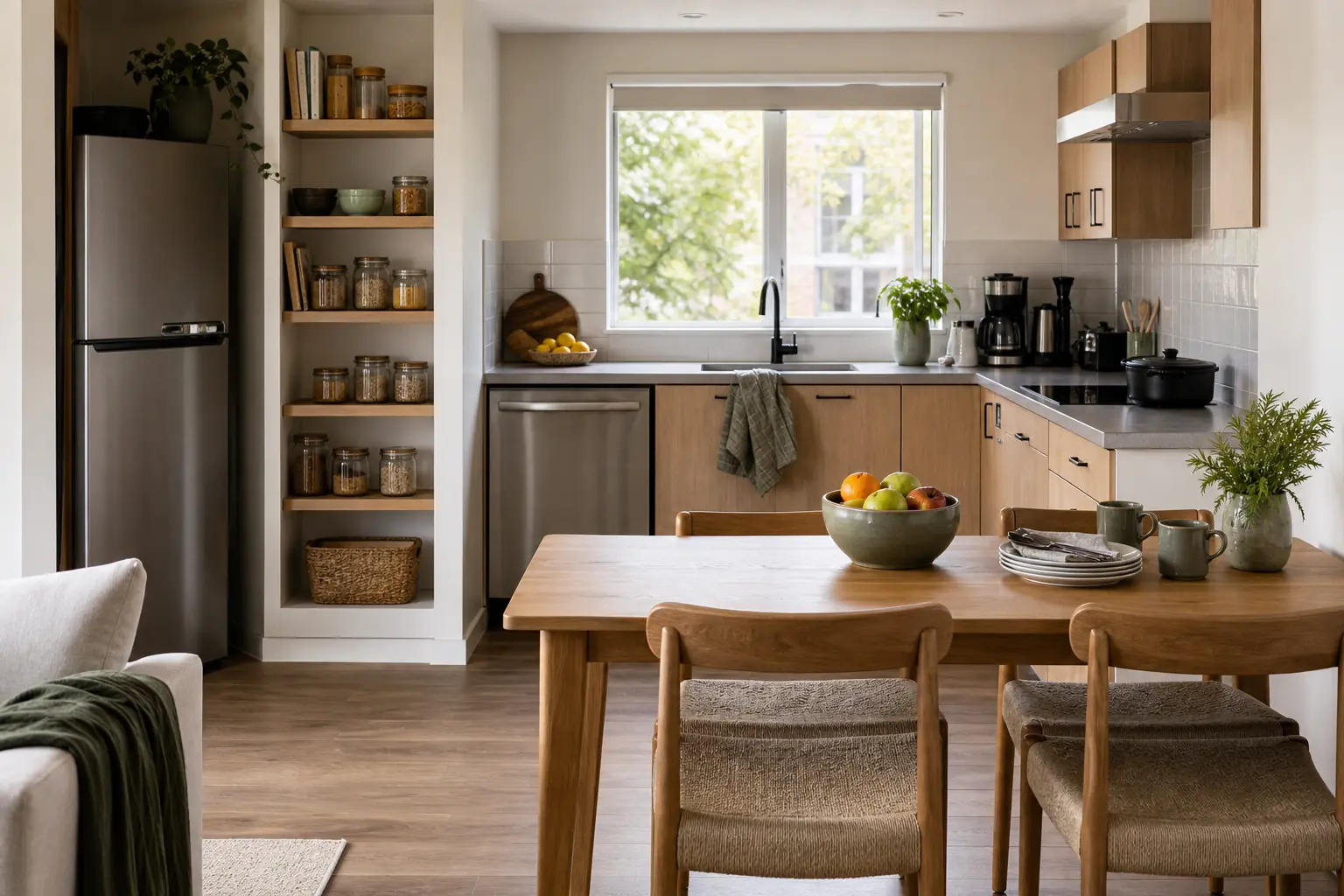
Five principles for a credible culinary stay
Food themes are judged in use. Every object should help guests source, prepare, serve, or understand what they came to taste.
-
Name one edible promise
Lead with one repeatable outcome such as V60 coffee with locally roasted beans, a market-to-table dinner, or a regional tasting. Add supporting amenities only after that outcome works end to end.
-
Complete the workflow
Pair equipment with every dependency: a grinder needs a scale, filters, a kettle, beans, and a recipe; sharp knives need boards, safe storage, a honing plan, and a cleaner check.
-
Make local provenance useful
Name the producer, market day, distance, opening pattern, and what to buy. Date printed recommendations and verify them regularly instead of relying on vague local-product language.
-
Treat consumables as inventory
Set par levels, allergen labels, opening dates, replacement rules, and discard thresholds for beans, tea, oils, spices, welcome foods, and any host-provided alcohol.
-
Design for serving and reset
Provide enough matching dishes, glassware, seating, bins, drying space, and dishwasher capacity for the advertised occupancy. The meal is not complete until the room can be safely reset.
Good fit when
- The property is near a credible market, roaster, tea merchant, winery, farm shop, or regional food tradition that the host can accurately explain.
- The kitchen or one dedicated counter can support a full activity without displacing ordinary meal preparation.
- Turnover staff can inspect specialty equipment, date consumables, and replace missing pieces against a photo standard.
Poor fit when
- Ventilation, refrigeration, water quality, pest control, or electrical capacity is already unreliable.
- The host cannot maintain perishable stock, current producer information, or alcohol-related house rules where applicable.
- The listing calls a basic kitchen chef-ready while supplying dull knives, mixed cookware, too few place settings, or no usable prep surface.
Start with coffee, tea, or a regional pantry shelf when construction is not justified. A narrow promise operated well is more credible than a broad culinary label.
Spend according to the workflow you can sustain
These are practical USD planning ranges, not quotes or performance forecasts. Confirm local taxes, shipping, installation, food rules, alcohol rules, insurance, and contractor costs before purchase.
Brew or pantry proof
$350-$750Fund one complete low-construction workflow: grinder, brewer, variable-temperature kettle, scale, cups, dated beans or tea, recipe card, labeled pantry staples, and the first replacement stock. Spend on precision and replenishment, not decorative containers.
Cook and gather
$1,800-$4,500Upgrade the guest-use layer: durable knives and boards, coherent pans, small appliances, matching service for occupancy, task lighting, labeled storage, a dining table or tasting counter, and a modest beverage fridge if power and ventilation allow.
Destination kitchen
$8,000-$25,000+Reserve for a built-in range, ventilation, electrical or plumbing work, cellar storage, outdoor cooking, a large-format table, or layout changes. Budget separately for design, permits, installation, commissioning, safety review, and recurring specialist service.
Five areas that carry the food promise
Arrival pantry
Orient guests without making them inspect every cupboard.
- Group host-provided staples on one labeled shelf and separate them from prior-guest leftovers.
- Date the local product card and state what is complimentary, what is sealed, and what must be refrigerated.
- Place allergen and ingredient information beside any welcome food rather than only in the digital guide.
Prep and cooking zone
Make the promised dish possible on a clear, safe surface.
- Keep the best knife set, boards, oil, salt, and most-used pans within one step of the main prep area.
- Label unfamiliar controls and provide short operating cards for induction, specialty ovens, or outdoor equipment.
- Leave one uninterrupted counter section empty in turnover photos so guests can unpack market ingredients.
Brewing or tasting station
Keep specialty drink equipment complete and independent from meal prep.
- Give the station its own safe power point, water path, waste container, and drying position.
- Store measured consumables in original or clearly dated packaging with a tested house recipe.
- Match cups or stemware to the advertised occupancy and keep protected replacements off the guest shelf.
Dining and serving
Support the advertised group at one time, not in shifts.
- Count chairs, dinnerware, cutlery, glasses, trivets, and serving pieces against maximum occupancy.
- Set lighting high enough to see food clearly and place pendants outside normal head and serving paths.
- Provide a nearby landing surface for platters, bottles, and cleared dishes so the table remains usable.
Market and cleanup flow
Plan the route from shopping bag to storage to waste.
- Publish market days, typical travel time, bag storage, and the refrigerator space actually available to guests.
- Label recycling, compost, grease, bottle, and food-waste rules according to local collection practice.
- Size dish racks, towels, dishwasher supplies, and bins for one full meal at the advertised occupancy.
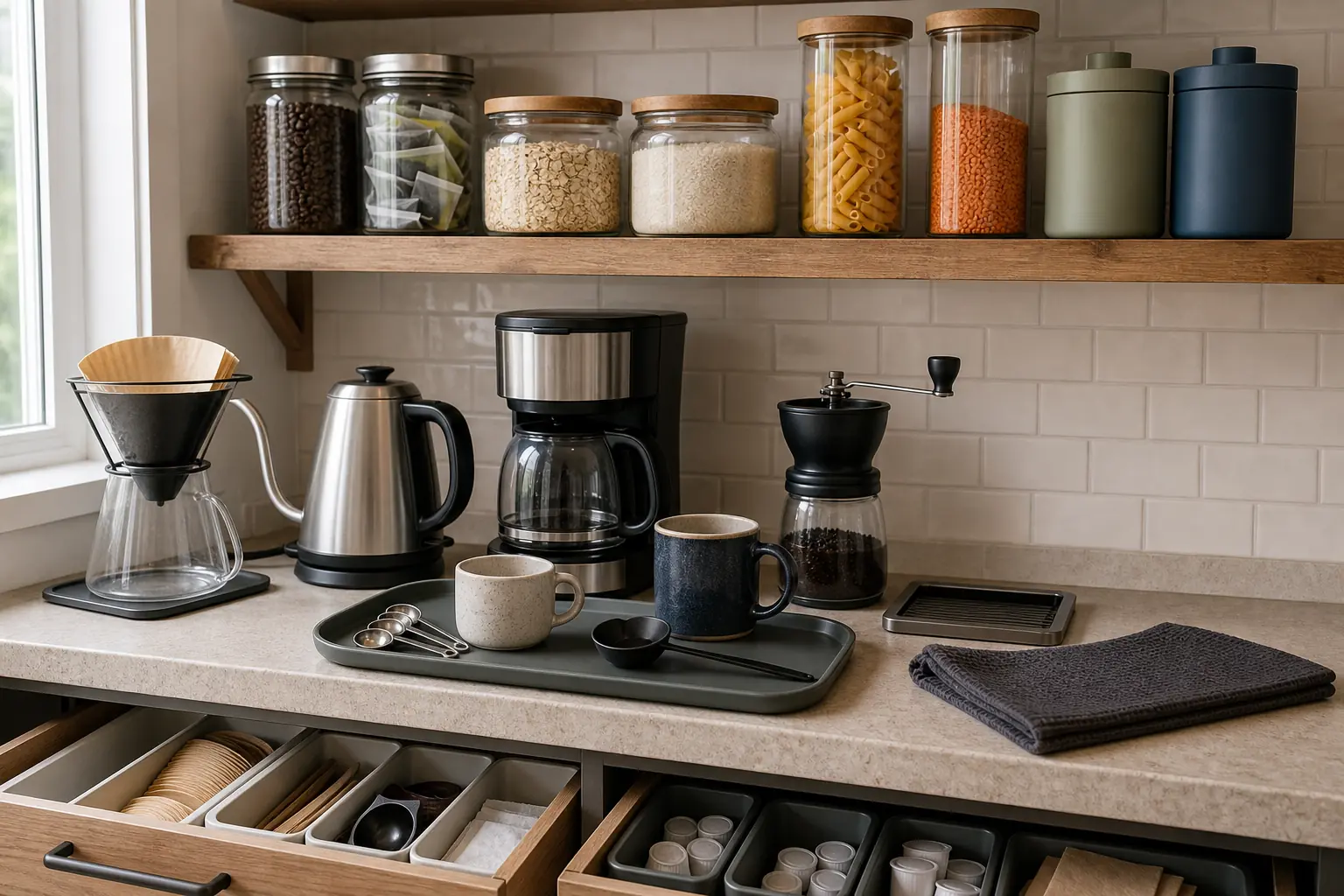
Pick the experience before buying the equipment
Each version has a different hero, proof set, and operating burden. Mixing all three usually weakens the listing and complicates turnover.
The roaster or tea counter
Promise: Guests can make a precise cup from a current regional lot without bringing gear.
Proof: Show the named grinder or kettle, brewer, scale, dated bag or tin, recipe card, cup count, water source, and drying setup in one readable sequence.
Avoid: Do not offer an espresso, pour-over, capsule, French press, and gongfu collection unless every path is complete, clean, and documented.
The market kitchen
Promise: Guests can shop locally and cook a defined regional meal with dependable tools.
Proof: Show open prep space, knife and board set, core pans, pantry shelf, refrigerator capacity, range controls, market card, and the finished table.
Avoid: Do not use chef kitchen copy when ventilation, cookware, knives, storage, or service count cannot support the advertised occupancy.
The tasting and long-table house
Promise: A couple or group can compare regional bottles or foods and serve everyone together.
Proof: Show temperature-controlled storage where provided, matching glassware or plates, tasting notes, water, spit or waste handling, the full table, and safe transport information.
Avoid: Do not imply alcohol is included, provide unlicensed service, or hide deposits and paid-stock rules. Confirm the local requirements first.
Run the theme like a small food program
Five turnover standards
- Count every specialty tool, knife, glass, serving piece, and appliance attachment against a laminated reset photo.
- Wash, fully dry, and return brewers, tea ware, decanters, grinders, boards, and reusable containers to their assigned positions.
- Check opening dates, roast or harvest dates, seals, odors, pests, and discard thresholds; never top up old consumables with new stock.
- Test the kettle, scale, grinder, refrigerator temperature, range ignition or induction controls, dishwasher, and extraction equipment used in the promise.
- Update the producer or market card when hours, seasons, stockists, or transport instructions change, and remove any recommendation that cannot be verified.
Five photo proofs
- 1One wide image showing the complete kitchen or drink station and its relationship to storage, water, power, and dining.
- 2One overhead or straight-on inventory image where guests can count the core cookware, knives, brewers, or tasting pieces.
- 3One active workflow image: beans being weighed, tea decanting, produce on the prep surface, or a dish moving from range to table.
- 4One legible local-provenance image with a current producer label, market card, roast date, harvest note, or regional pantry item.
- 5One full-occupancy dining image with every chair, place setting, serving surface, and relevant outdoor or kitchen connection visible.
Formula: [Prepare or pour a specific thing] with [named equipment or local ingredient], then [serve it in the exact place]. Follow with counts, dates, storage, and sourcing details.
Grind Friday-roasted beans on the Baratza, brew them by V60 on the built-in scale, then carry breakfast to the six-seat market table. The kitchen includes two sharp chef knives, three cast-iron pans, service for six, a guest pantry shelf, and a Saturday market card checked this month.
Five ways food themes lose credibility
Calling inventory a concept
A pod machine, novelty sign, and welcome basket do not define an experience. State the drink or meal guests can actually complete.
Buying hero gear without dependencies
A range without extraction, a grinder without a scale, or a decanter without safe washing creates work instead of value.
Using generic local language
Replace local treats and nearby wineries with named producers, current timing, distance, what to buy, and a dated verification process.
Ignoring food and alcohol controls
Unlabeled allergens, opened stock, uncertain refrigeration, or unclear paid-bottle rules expose guests and staff to avoidable risk.
Photographing styling instead of capacity
A close crop of two glasses cannot prove service for eight. Show counts, prep area, storage, table size, and the cleanup route.
Build the experience in four passes
Write the guest task first, then test the room under realistic occupancy before adding optional flourishes.
- Define the plate or pour
Choose one target guest and one result they should achieve. List every ingredient, tool, surface, instruction, safety condition, and cleanup step it requires.
- Run a full service test
Shop from the recommended producer, prepare the promised item, seat the advertised occupancy, wash everything, and record every missing or awkward step.
- Write the reset system
Set par levels, date rules, storage labels, discard thresholds, appliance tests, replacement stock, and one reference photo for each zone.
- Publish measurable proof
Photograph the workflow and capacity, name the equipment and source, state what is included, and review guest questions after launch for gaps.
Kitchen and service questions
What is the best first food upgrade for a vacation rental?
Choose one complete, easy-to-reset workflow. A quality coffee or tea station with dated stock, clear instructions, matching cups, and spare supplies is usually more credible than scattered kitchen gadgets.
What should an Airbnb welcome basket include?
Use a small regional selection with sealed packaging, ingredient and allergen details, opening or refrigeration guidance, and a card naming the producer. Match quantity to occupancy and stay length.
How do I prove a chef kitchen in listing photos?
Show clear prep space, range and extraction, knife and board set, core pans, refrigerator capacity, service for occupancy, and the dining connection. Name equipment only when that detail is accurate and maintained.
Should hosts provide wine or other alcohol?
Only after checking local licensing, age, tax, insurance, and platform requirements. State whether bottles are complimentary, paid, display-only, or not supplied, and provide safe transport information.
How often should food guide information be updated?
Check time-sensitive market, producer, and transport details on a fixed schedule and whenever a guest reports a change. Put a visible checked date on printed recommendations.
The Food & Drink path works when a precise culinary promise is fully equipped, locally grounded, honestly photographed, and simple enough for the turnover team to restore every stay.
Browse all Themes