Design & Culture
Build the stay around a precise idea that can be traced through the rooms: regional material, a working collection, one design period, a local craft, or a creative practice guests can understand and use.
The short answer: A credible design and culture stay edits hard, names makers and sources accurately, pays local collaborators, protects original work, and explains what guests may handle. It replaces generic decor with fewer durable pieces whose relationship to the building and place is clear.
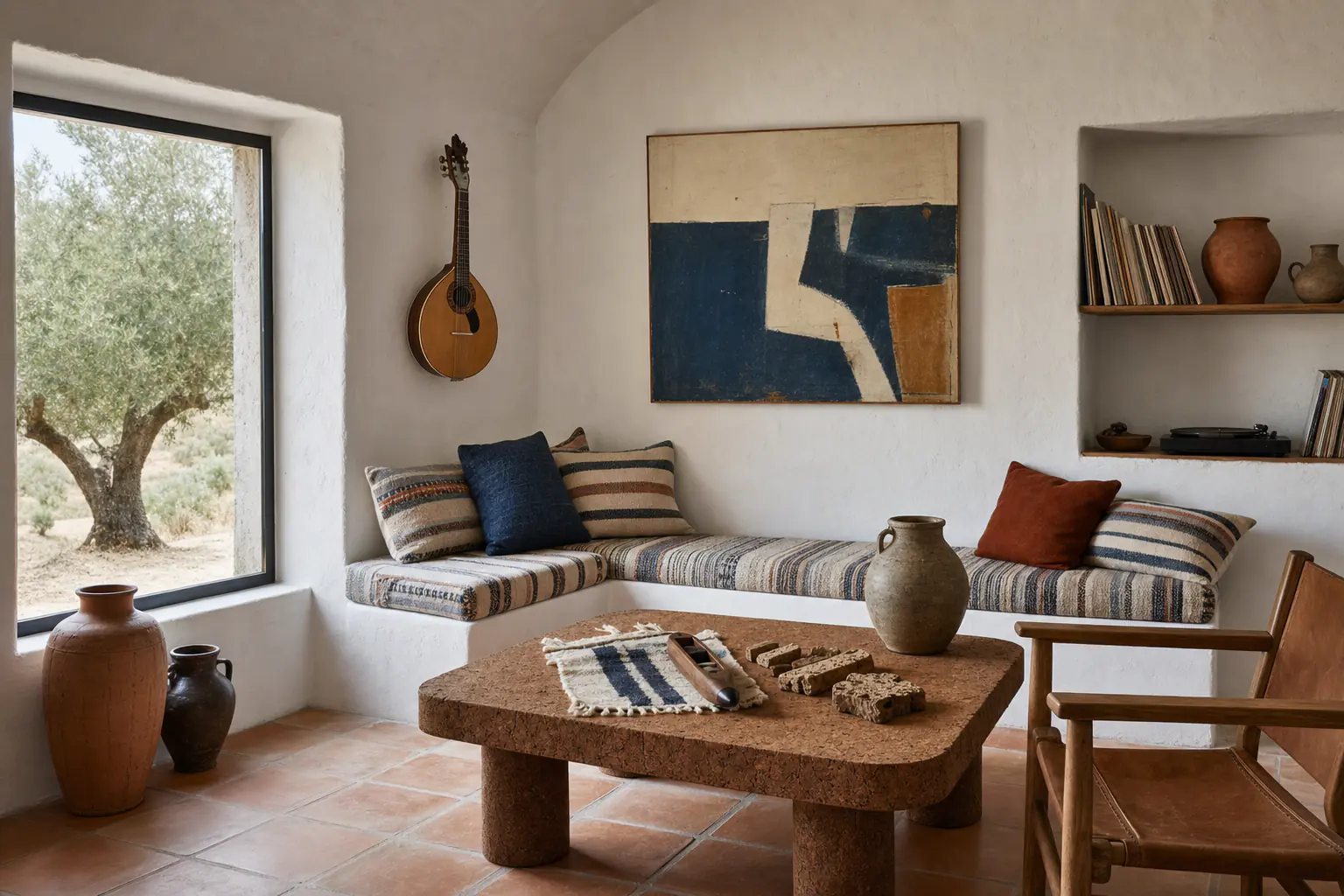
Let every object support the thesis
Begin with a sentence, not a shopping list. The building, neighborhood, collection, and guest activities should reinforce one point of view while remaining comfortable, safe, repairable, and truthful.
-
State the point of view
Define the property in one testable sentence, such as a 1970s coastal house restored around regional timber and printmaking. Use that sentence to decide what stays, what leaves, and what never enters the cart.
-
Document provenance without invention
Record maker, date or era, material, place of origin, purchase source, restoration, and uncertainty. Use "attributed to," "in the style of," or "date unknown" when evidence does not support a stronger claim.
-
Collaborate locally with terms
Commission or borrow work through written agreements covering fee, credit, display period, sales inquiries, care, damage, insurance, photography, reproduction, and return. Collaboration should create value for the contributor, not merely borrow their identity.
-
Edit the collection
Give each room a lead piece, supporting material, useful activity, and empty space. Rotate or remove objects that repeat the same idea, cannot be explained, interrupt circulation, or exist only to fill a wall.
-
Separate interaction from preservation
Mark what guests may sit on, play, read, touch, or operate. Secure display-only, fragile, sharp, toxic, unstable, culturally sensitive, or irreplaceable material and provide robust alternatives for hands-on use.
-
Interpret with context and permission
Use concise labels, a room guide, or an audio layer to connect people, place, process, and use. Clear rights for text, images, recordings, archives, trademarks, and community knowledge before publishing or reproducing them.
A strong fit when
- The host can articulate a specific design or cultural thesis rooted in the building, collection, practice, or locality.
- Important pieces have records, care instructions, replacement plans, and enough durability for their intended guest use.
- Local artists, makers, historians, or cultural organizations can choose how they are credited and compensated.
- There is room to display fewer objects well without narrowing exits, work surfaces, luggage space, or accessible routes.
- The team can inspect collections, update interpretation, manage rights, and withdraw material when facts or permissions change.
A weak fit when
- The concept depends on mass-produced themed props, copied motifs, or a mix of unrelated "vintage" purchases.
- Rare, sacred, archival, or personally significant objects must be left unsecured in ordinary guest circulation.
- Cultural claims are based on appearance or seller descriptions rather than documented sources and informed contributors.
- Furniture is selected for photographs but is uncomfortable, unstable, flammable, difficult to clean, or impossible to repair.
- The host cannot clear commercial photography, music, film, artwork, archive, logo, or collaborator rights used in the listing and stay.
A design-led stay can be modest. Specificity, authorship, usefulness, and care matter more than the age, rarity, or purchase price of the collection.
Fund the thesis, records, and care
These are broad USD editorial planning ranges, not supplier quotes or return forecasts. Allow for research, collaborator fees, tax, mounting, conservation, maintenance, interpretation, rights, insurance, and professional advice; acquiring objects is only one part of the cost.
Edit and identify
$250-$1,500Remove generic decor, inventory what remains, research known pieces, commission a local map or small work, improve one display light, add concise labels, and photograph the strongest material and construction details.
Build a working collection
$2,500-$15,000Acquire or commission two to five durable anchor pieces, pay collaborator and rights fees, add secure mounting, UV control where needed, listening or reading equipment, repair stock, and a properly designed room guide.
Create a cultural program
$20,000-$100,000+Plan restoration, built-in display, acoustic or studio work, archival facsimiles, environmental controls, rotating commissions, research, professional interpretation, accessibility formats, security, and collection insurance.
Carry the point of view through use
Entry thesis
Make the idea clear without turning arrival into a lesson.
- Use one anchor object, material, or architectural feature to introduce the property point of view.
- Place a short orientation where guests can choose to read it after bags and keys are settled.
- Keep credits, house controls, and safety information visually distinct so interpretation never obscures practical instructions.
Living collection
Balance visual authority with everyday comfort and circulation.
- Choose a lead piece and remove competing filler from its sightline, then leave surfaces for guest belongings.
- Test every guest-use chair, table, lamp, rug, and cabinet for stability, comfort, cleanability, scale, and repair access.
- Secure display-only work against tipping, impact, theft, sunlight, moisture, and accidental contact without blocking exits.
Reading, listening, and viewing
Turn cultural material into an optional, complete activity.
- Edit books, recordings, or films around the thesis and credit authors, performers, publishers, labels, and sources accurately.
- Pair the collection with comfortable seating, task light, simple controls, lawful access, and a clear reset location.
- Offer transcripts, captions, large-print text, headphones, or non-audio alternatives where they improve access and neighbor comfort.
Studio or hands-on table
Invite making without exposing guests or original work to preventable harm.
- Provide durable tools and low-risk materials with age guidance, ventilation, surface protection, cleanup, and waste instructions.
- Use reproductions, samples, or study pieces for handling; store originals, blades, solvents, pigments, and specialist equipment securely.
- Credit the practitioner who shaped the activity and define whether guest work may be left, displayed, photographed, or removed.
Local bridge
Connect the interior to living culture beyond the property.
- Build a current route to independent studios, architecture, archives, venues, bookshops, and public collections with opening details checked regularly.
- Pay for commissioned writing, maps, photography, and recommendations when they form part of the product.
- Avoid directing guests to private homes, sensitive sites, restricted ceremonies, or small workplaces without explicit ongoing consent.
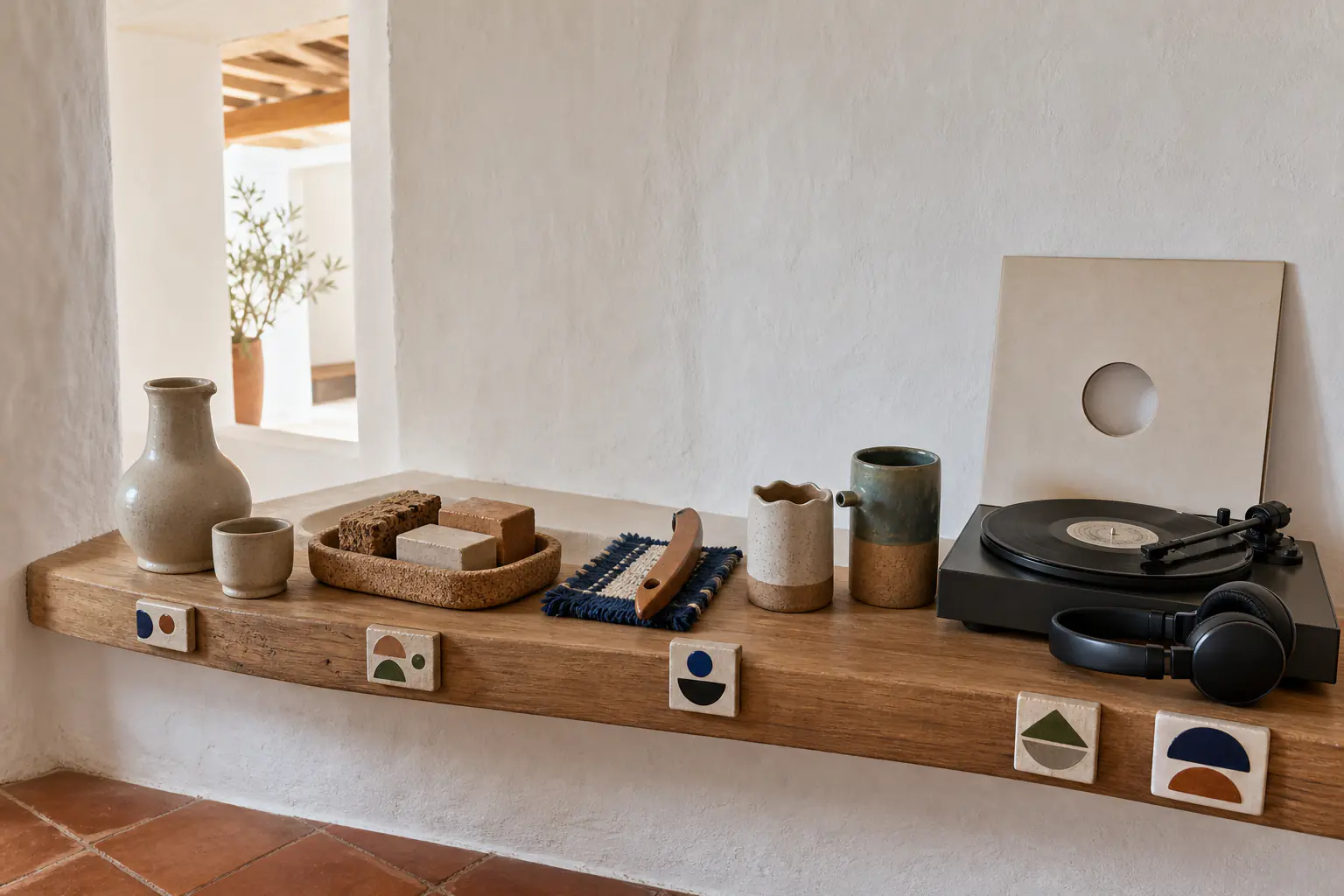
Choose one source of authority
Each version needs a different research and care model. Combining all three without discipline usually produces an incoherent collection and an unmanageable inventory.
The regional maker house
Promise: Frame the stay through materials and objects made by named practitioners working in or meaningfully connected to the region.
Proof: Paid commissions or documented purchases, maker-approved biographies, material and process notes, current studio route, repair contacts, credits, and photography permissions.
Avoid: Calling mass-produced goods local, flattening different traditions into one look, bargaining for exposure, or sending guests to a workshop without consent.
The period-specific interior
Promise: Frame the property through one defined era while preserving present-day safety, comfort, and honest distinctions between original, restored, and reproduction pieces.
Proof: Date ranges, source records, restoration notes, period-consistent anchor pieces, concealed modern necessities, tested furniture, and labels that mark reproductions plainly.
Avoid: Mixing decades because colors match, claiming authenticity without evidence, retaining unsafe wiring or finishes, or sacrificing mattresses, lighting, and climate control to the theme.
The working creative collection
Promise: Frame the stay around a practice such as printmaking, photography, music, writing, or film through guest-safe tools and a tightly edited reference collection.
Proof: Complete activity station, use instructions, licensed media, robust study pieces, consumable inventory, ventilation or acoustic controls, cleanup plan, and secured originals.
Avoid: Leaving specialist equipment unexplained, exposing chemicals or irreplaceable work, using unlicensed screenings or recordings, or presenting props that cannot perform the advertised activity.
Operate the collection like a collection
Collection and collaborator controls
- Maintain an object register with ID, image, location, maker, source, date or uncertainty, material, dimensions, condition, value, rights, permitted use, and emergency contact.
- Give cleaners object-specific dusting, lifting, product, moisture, cable, stylus, instrument, textile, and breakage instructions; "clean carefully" is not a procedure.
- Inspect guest-use furniture, mounts, frames, cords, equipment, books, records, tools, and consumables on a fixed schedule and remove unsafe items immediately.
- Keep repair stock and named local repair routes for key pieces. Record interventions so restored objects are not later described as untouched originals.
- Review collaborator credits, display periods, loan returns, sales status, links in printed material, route details, and permissions at least quarterly.
- Use a documented escalation path for damage, disputed attribution, requested cultural withdrawal, rights complaints, or a collaborator ending consent.
Photo proof to publish
- 1Open with a wide room view that shows architecture, anchor pieces, useful seating, and circulation together.
- 2Add close views of signatures, joinery, weave, glaze, print marks, restoration, labels, and operating controls that substantiate the description.
- 3Show interactive equipment ready for actual use with all included tools and safety provisions visible.
- 4Caption original, restored, reproduction, attributed, commissioned, and guest-use pieces accurately; do not use "museum quality" or "authentic" without support.
- 5Secure written permission for artwork, archives, book interiors, people, private interiors, trademarks, and commissioned images before listing publication or advertising reuse.
- 6Keep a rights log connecting every published image and quoted text to its creator, license, territory, term, credit line, and approved uses.
[specific design or cultural thesis] + [named maker, era, material, or practice] + [guest-use activity] + [provenance or collaboration fact] + [care or access boundary]
1970s coastal house restored around regional timber and contemporary printmaking. Read the signed print folio or use the guest block-printing table; original works are documented purchases from three named area artists and remain secured behind glazed frames.
Where a point of view becomes a costume
Buying a theme in one order
Write the thesis and inventory the building first. Add only pieces with a clear role, source, care plan, and relationship to the whole.
Claiming provenance from appearance
Record evidence and uncertainty. A seller label, visual resemblance, or family story may be a lead, but it is not automatically an attribution.
Using culture as generic decor
Work with informed people, name specific sources, pay collaborators, respect restrictions, and remove material when permission or context is absent.
Making every object untouchable
Provide durable chairs, books, tools, and reproductions for use, then secure fragile or restricted originals with clear, discreet interpretation.
Clearing rights after publication
Obtain image, text, music, film, archive, trademark, collaborator, and publicity permissions before photography goes live, and track expiry or withdrawal terms.
Move from thesis to maintained collection
The process should produce fewer objects, better records, safer interaction, and a clearer relationship between the property and its place.
- Step 1: Write and audit
State the point of view in one sentence. Inventory architecture, furnishings, art, books, media, stories, and activities; flag weak provenance, generic filler, safety issues, rights gaps, and culturally sensitive material.
- Step 2: Research and collaborate
Verify sources, consult relevant practitioners or knowledge holders, agree fees and permissions in writing, select anchor pieces, and define what guests may use, view, photograph, or hear.
- Step 3: Install and test
Edit each room, secure originals, complete guest-use stations, test comfort and durability, add accessible interpretation, train the turnover team, and simulate breakage, spill, loss, and equipment reset.
- Step 4: Publish and review
Photograph rooms and details with cleared rights, write precise credits and claims, launch the object register and condition checks, and schedule collaborator, route, interpretation, and permission reviews.
Design and culture FAQ
How do I choose a point of view for a design-led rental?
Start with evidence already present: architecture, a local material, a documented era, an established collection, or a practice connected to the host or place. Write one sentence specific enough to exclude unrelated purchases, then test every room and object against it.
What provenance records should a host keep?
Record the object, maker or attribution, date or range, material, origin, seller or donor, receipt, supporting documents, restoration, condition, value, image rights, care, location, and uncertainty. Keep source documents separate from the shorter guest-facing label.
How can guests interact with a collection safely?
Create clear use categories and supply robust pieces for sitting, reading, listening, or making. Secure fragile, hazardous, sacred, restricted, or irreplaceable material; test equipment; provide simple controls; and inspect every interactive item on a defined schedule.
How should hosts work with local artists and makers?
Begin with a paid proposal and written terms for ownership or loan, fee, commission, credit, display, photography, sales leads, care, damage, insurance, return, and withdrawal. Let collaborators approve how their identity, process, and work are described.
What permissions are needed for design and culture listing content?
Permission depends on the material and jurisdiction, but hosts should assess copyright, moral rights, trademarks, publicity, privacy, music, film, archives, artwork, photography, contracts, and community-specific cultural authority. Record the approved use, term, territory, credit, and withdrawal process, and obtain qualified advice when rights are unclear.
A design and culture stay earns its character through a clear thesis, honest provenance, fair collaboration, disciplined editing, useful and durable objects, guest-safe interaction, accessible interpretation, and permissions that hold up beyond the photograph.
Browse all Themes