Choose the one installation worth booking for
A major upgrade should change why a qualified guest chooses the property. Its value is not the construction spend or the number of features; it is a distinct, photographable use that can be permitted, serviced, priced, and kept available.
The short answer: Pass the project through a demand gate before design begins, then underwrite approvals, utilities, life safety, maintenance, replacement, lost nights, and technician access. Build one complete installation and let the rest of the property support that reason to book.
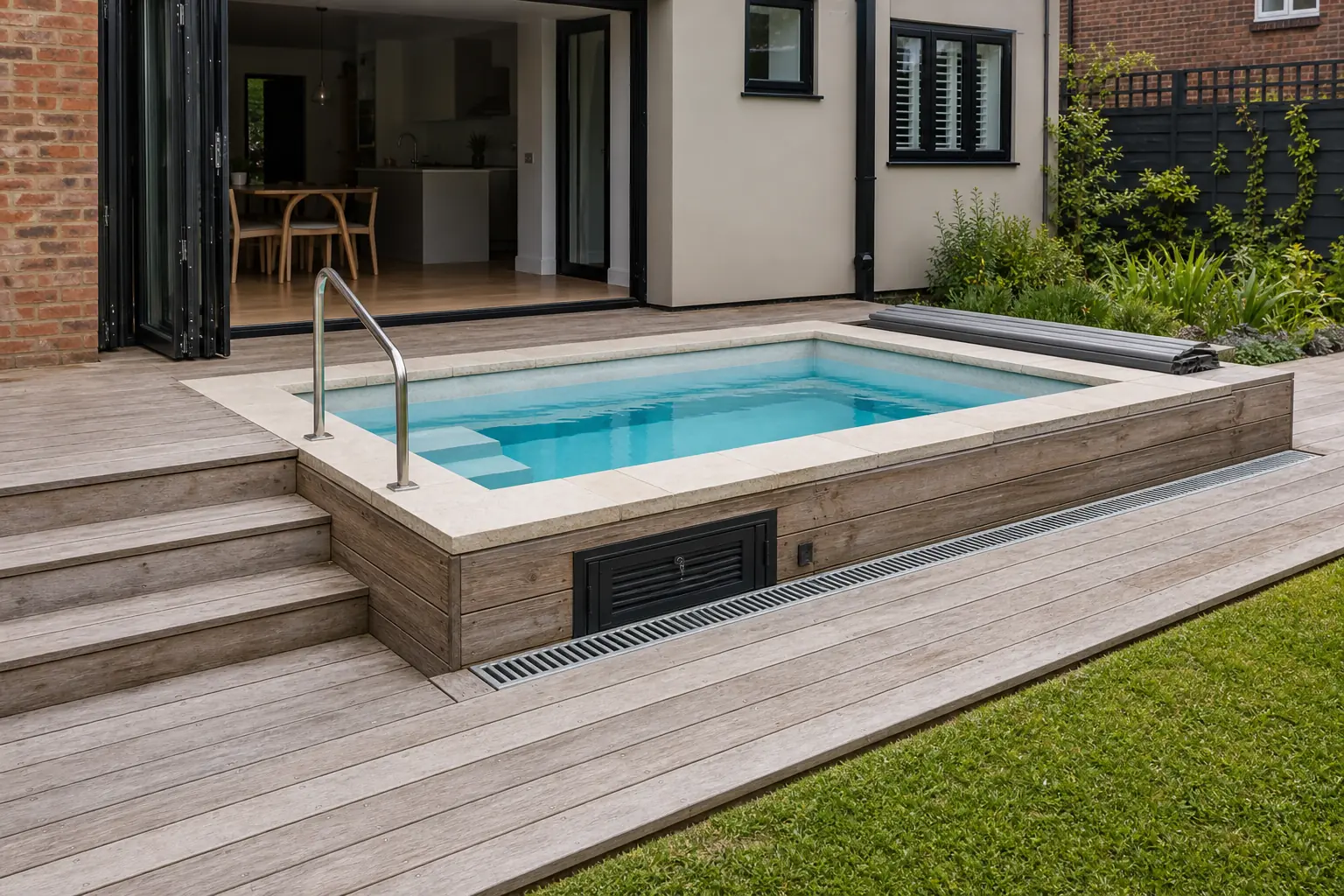
Make one high-conviction move earn its footprint
Large projects concentrate risk as well as attention. A disciplined brief ties guest demand to a compliant design, an operable asset, and a listing promise that still works when the feature needs service.
-
Require a demand gate
Name the target guest, trip occasion, competing supply, seasonal use, expected booking influence, and evidence source. Define in advance what result would cancel or resize the project instead of using enthusiasm as approval.
-
Use professional design for the actual risk
Engage appropriately qualified local designers, engineers, contractors, and specialty consultants for structure, fire safety, accessibility, water, electrical, mechanical, acoustic, food-service, or landscape issues. Product selection is not a substitute for integrated design.
-
Map permits and operating permissions early
Confirm planning or zoning, building, trade, health, environmental, fire, heritage, event-use, lodging, and insurance implications before freezing layout or ordering long-lead equipment. Record who owns each submission and inspection.
-
Model utilities at simultaneous peak
Calculate electrical demand, fuel, water pressure, hot-water recovery, drainage, wastewater, ventilation, cooling, data, and backup needs when guests use the building normally at the same time as the new installation.
-
Design safety into normal use and failure
Address egress, guarding, slips, burns, entrapment, ventilation, load limits, emergency isolation, lighting, child access, signage, monitoring, and closure. Consider what happens during outage, leak, misuse, alarm, and unattended reset.
-
Underwrite lifecycle cost and downtime
Include consumables, inspections, specialist labor, cleaning time, energy, water, parts, finishes, warranties, planned closure, repair lead time, and end-of-life replacement. Initial construction is only the entry price.
-
Give service access equal design status
Technicians need routes, panels, valves, drains, lifting clearances, safe isolation, stock space, and diagnostic access without dismantling guest finishes. A beautiful asset that cannot be serviced economically will not remain bookable.
-
Resist feature accumulation
Choose one installation with a legible guest ritual and finish its supporting spaces. Multiple unrelated upgrades divide capital, complicate operations, weaken photography, and make it harder to know what changed demand.
Advance to feasibility when
- Booking inquiries, lost-demand notes, competitor review, guest research, or a controlled trial point to one specific unmet use.
- The target guest and trip occasion align with the property location, layout, season, rate position, and operating model.
- Local professionals see a plausible approval, utility, structure, safety, access, and service route.
- The business can absorb design fees, contingency, construction closure, commissioning, launch, and a repair reserve without depending on immediate uplift.
- One person owns the asset register, maintenance schedule, vendor relationship, closure decision, and post-launch review.
Stop or resize the project when
- The proposal is justified mainly because similar properties appear to have the feature, without evidence from the relevant market and guest.
- The concept requires several expensive amenities to feel complete or cannot be summarized as one bookable activity.
- Permitting, insurer acceptance, utility capacity, wastewater, fire safety, or access is assumed rather than checked.
- Routine service would require entering occupied bedrooms, lifting over finished rooms, draining across guest paths, or demolishing joinery.
- The return model excludes lost nights, specialist callouts, consumables, replacement, and periods when the feature cannot be advertised.
A no-go decision is useful project output. It protects capital for a better-supported installation or for improvements to the core stay that demand evidence actually favors.
Price the decision before pricing the object
These broad editorial tiers organize project scope; they are not quotes or return forecasts. Location, site conditions, professional obligations, code, access, finish level, taxes, freight, and closure costs may move a project far outside them.
Demand and feasibility gate
$3,000-$15,000Plan for guest and competitor research, measured survey, concept options, preliminary professional advice, utility and drainage checks, approval mapping, insurer discussion, outline costing, operating brief, risk register, and a written go, revise, or stop decision.
Contained signature installation
$25,000-$90,000Allow for detailed design, permits, a focused room or outdoor feature, enabling utilities, safety systems, durable finishes, commissioning, service clearances, staff training, photography, contingency, and construction downtime.
Property-defining build
$100,000-$500,000+Include a consultant team, major structural or site work, utility upgrades, complex approvals, accessibility integration, specialist equipment, external works, temporary protection, extended closure, testing, spares, warranties, launch, and a funded lifecycle reserve.
Design beyond the hero frame
Guest threshold and orientation
Make the experience understandable before first use.
- Create a clear route from the normal house circulation with appropriate access, lighting, privacy, storage, and any changing or preparation space.
- Place essential controls, occupancy limits, operating conditions, and emergency information at the decision point without covering the room in signs.
- Preserve a bypass so guests who do not use the installation can still enjoy the property safely and comfortably.
Primary installation
Deliver one complete, durable, photographable activity.
- Set dimensions from actual bodies, equipment operation, transfer space, cleaning reach, doors, guards, and required clearances rather than a presentation rendering.
- Coordinate structure, waterproofing, acoustics, ventilation, lighting, controls, and finishes around the primary use.
- Specify guest-contact materials for heavy turnover, repairability, available replacements, and the cleaning products they must tolerate.
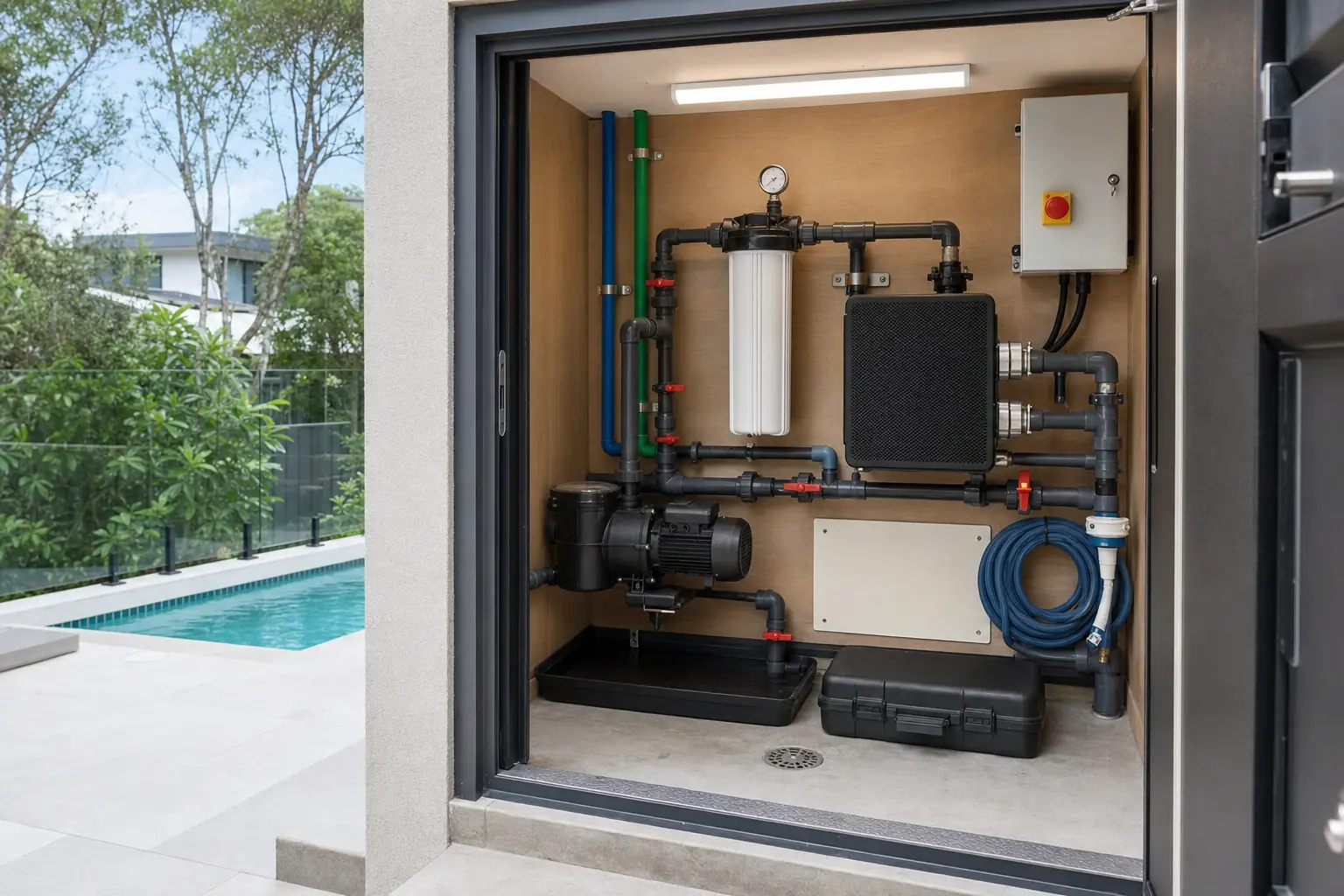
Utility and plant zone
Support peak operation without destabilizing the rest of the stay.
- Document connected loads, diversity assumptions, isolation points, metering, drainage routes, ventilation duty, water treatment, network needs, and failure alarms.
- Separate guest controls from protected staff or technician controls and label every circuit, valve, filter, and shutoff.
- Provide drainage, spill containment, ventilation, working light, and safe standing room where maintenance actually occurs.
Service route and back-of-house
Replace the largest component without crossing or damaging guest rooms.
- Trace delivery, removal, lifting, filter change, waste, chemical, linen, and tool routes at full component dimensions.
- Keep access panels removable, fasteners reachable, warranties valid, and diagnostic points visible without cutting finished surfaces.
- Store approved consumables, spares, protective equipment, manuals, and lockout materials in secure labeled locations.
Supporting stay and camera view
Let the house reinforce the installation without adding another headline feature.
- Improve the adjacent shower, seating, dining, gear drop, or storage that completes the primary ritual.
- Protect clean sightlines from the intended photo positions while retaining guards, rails, drains, grilles, controls, and service doors required in real operation.
- Plan a truthful hero frame for different seasons and a secondary frame that proves scale, access, and context.
Match the installation to a specific travel decision
These versions are deliberately different capital theses. Each can anchor a listing; none needs a second signature project to explain its value.
The destination ritual
Promise: A private sauna, bathing, cooking, tasting, screening, or practice experience guests can organize the trip around.
Proof: Demand evidence, professional technical design, required approvals, dedicated preparation and finish zones, intuitive controls, commissioning records, service plan, and one unmistakable listing image.
Avoid: Combining several fashionable rituals, selecting domestic equipment for intensive turnover, or relying on outcome claims instead of physical proof.
The serious basecamp
Promise: A purpose-built room that makes a location-specific activity easier before and after every outing.
Proof: Secure gear capacity, wash and dry sequence, repair bench, drainage, ventilation, charging or fuel-safe storage, route information, durable access, and replacement parts for high-wear fittings.
Avoid: Building generic storage without sizing real equipment, ignoring contaminated or wet routes, or supplying specialist gear that operations cannot inspect.
The gathering anchor
Promise: One kitchen, long table, meeting room, accessible suite, or ceremony space that solves a high-value group need.
Proof: Verified occupancy, simultaneous use dimensions, life-safety and access review, utility throughput, acoustic or weather plan, supporting bathrooms and storage, event boundaries, and reset labor.
Avoid: Adding event capacity without approvals and parking, expanding the headline count beyond the rest of the property, or treating movable styling as infrastructure.
Keep the signature feature available and legible
Commissioning, service, and closure
- Create an asset register with model and serial numbers, approved products, warranties, inspection intervals, consumables, critical spares, installer contacts, and expected replacement dates.
- Translate commissioning requirements into daily, turnover, weekly, seasonal, and annual checks with a named owner and retained records.
- Set objective closure triggers for fault codes, leaks, damaged guards, failed tests, unusual noise or odor, unavailable safety systems, and overdue specialist service.
- Maintain a guest communication and rate plan for planned or unplanned downtime so an unavailable signature feature is never quietly left in active listing promises.
- Rehearse isolation, drainage, safe access, component removal, emergency response, and contractor entry before the first occupied stay.
- Review energy, water, consumables, cleaning minutes, repairs, unavailable nights, guest use, booking mentions, and complaints against the feasibility assumptions.
Photography for a capital feature
- 1Lead with the complete installation in use-ready condition and enough surrounding architecture to communicate privacy, scale, access, and the actual activity.
- 2Keep required rails, controls, covers, ventilation, guards, drains, and warning elements in the images; do not remove safety equipment for styling.
- 3Show the supporting sequence, such as changing to sauna, pantry to table, gear drop to workshop, or accessible bedroom to bathroom.
- 4Include one factual detail image that proves material quality, equipment specification, capacity, or a distinctive built element without implying an unsupported result.
- 5Reshoot after material design changes and verify that every seasonal, weather, staffing, or availability condition is reflected in captions and booking settings.
[One trip-defining installation] + [specific usable capacity or dimensions] + [supporting sequence] + [availability or operating boundary].
The six-place teaching kitchen centers the stay, with two ovens, a 3.1 m prep island, pantry staging, and a single table for 12. It is available for guest self-catering; catered service and events require separate prior approval.
What turns a statement project into a liability
Skipping the demand gate
Record the target guest, use occasion, evidence, assumptions, and cancellation criteria before spending on detailed design or equipment.
Ordering equipment before approvals and coordination
Resolve professional scope, permits, structure, utilities, clearances, insurance, delivery, and service requirements before committing to a product.
Pricing only construction
Add fees, enabling work, contingency, tax, freight, closure, commissioning, energy, water, labor, parts, inspections, repair lead time, and replacement.
Burying plant behind guest finishes
Give valves, panels, filters, drains, controls, and major components a safe service and replacement route that does not require demolition.
Accumulating headline features
Complete one installation and its supporting sequence. More amenities can dilute the booking story while multiplying failure points.
Assuming the feature is always available
Define closure criteria, booking controls, guest communication, repair response, and the property proposition during planned and unplanned downtime.
Move from evidence to an operable asset
Each stage ends with a decision. Continuing is earned by stronger information, not by the money already spent.
- 1. Pass the demand gate
Define the guest, trip, single installation, evidence base, competing alternatives, seasonal pattern, booking hypothesis, and explicit stop conditions. Test a lower-capital proxy where it can answer the same question.
- 2. Complete professional feasibility
Commission surveys and relevant design advice; map permissions, utilities, structure, safety, access, insurance, service routes, lifecycle cost, downtime, and a total project allowance.
- 3. Build and commission the whole system
Control design changes, inspect concealed work, protect service clearances, gather approvals and manuals, train staff, test failure modes, stock spares, and rehearse turnover before launch.
- 4. Launch one promise and audit it
Publish one bookable story with truthful images, track use and booking evidence, review operating cost and unavailable time, and correct the asset or proposition before considering another major feature.
Big Signature Upgrades FAQ
How do I know whether guests want a major upgrade?
Use several relevant signals: inquiry language, reasons bookings were lost, repeat guest interviews, local search behavior, comparable-property availability and positioning, and a small-scale test where possible. Write the demand hypothesis and the evidence threshold before design spending begins.
Which professionals should be involved?
That depends on the installation and jurisdiction. A project may require an architect or building designer, structural, civil, mechanical, electrical, fire, accessibility, acoustic, pool or spa, kitchen, landscape, planning, environmental, or other qualified specialists. The local approval authority and insurer can help identify required roles.
What belongs in lifecycle cost?
Include energy, water, consumables, cleaning labor, inspections, planned service, specialist callouts, parts, finish renewal, software or monitoring, insurance effects, planned closure, fault downtime, repair lead time, and eventual removal or replacement, as well as initial design and construction.
How much contingency should I carry?
Set contingency with the professional team after surveys, design maturity, site access, existing-building uncertainty, procurement risk, and local market conditions are understood. Do not present one universal percentage as sufficient, and keep contingency outside the feature wish list.
Why choose one signature installation instead of several upgrades?
One installation produces a clearer demand test, design brief, construction priority, operating model, maintenance reserve, photo story, and guest decision. Supporting improvements should complete that use; unrelated features can wait until the first asset has demonstrated reliable value.
A signature upgrade earns its place by passing a demand gate, securing professional and regulatory confidence, surviving lifecycle economics, remaining serviceable, and giving the guest one unmistakable reason to book.
Browse all Themes